
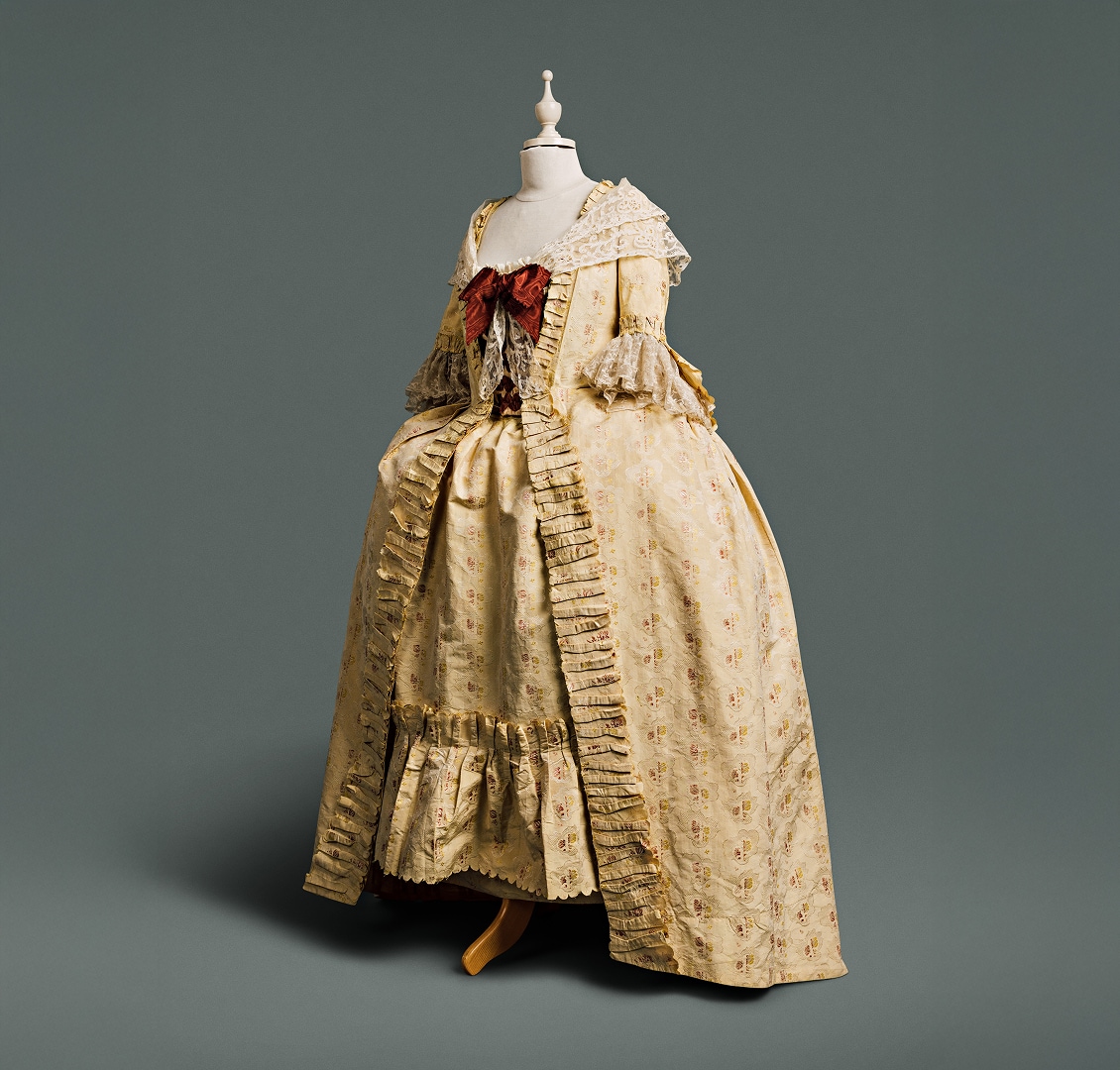
Robe à la française and Petticoat
c. 1765–1775 | English or American, silk
A robe à la française featured a loose panel at the bodice back, displaying large amounts of expensive cloth. The petticoat and skirt were supported by side hoops made of cane or whalebone, which displayed the fabric and enhanced the smallness of the waist.
The fabric is probably English and slightly older (c. 1745–1750s) than the garment. The brocade pattern shows pomegranates, roses, and other flowers against a damask woven pattern of lace bands.
The skirts of both the robe à la française and the robe à l’anglaise could be worn loose or draped into three sections in a form called a polonaise. This name was given to the skirts as an attempt at political satire. In the 18th century, Russia, Prussia, and Austria seized sections of Poland. This tripartite division of Polish territory was seen as similar to the division of the skirt. More likely, the raising of the skirt was simply intended to keep the valuable fabric off the floor.
Collection
Ivan Sayers collection