Clothing reveals us.

It communicates who we are, what we do, and what we value.

By examining historical garments we can know a person’s occupation, social and economic status, gender and cultural identity, and political and religious affiliation. We can understand when the wearer lived and the kind of material resources and technology available to them.

This exhibition presents a collection of women’s garments created between 1750–2000. Each reflects the design, materials, and construction techniques of its time, telling us the story of a past we can use to inform our future.


Explore the Exhibition

  • Dressed for History

    Women’s Fashion 1750–2000

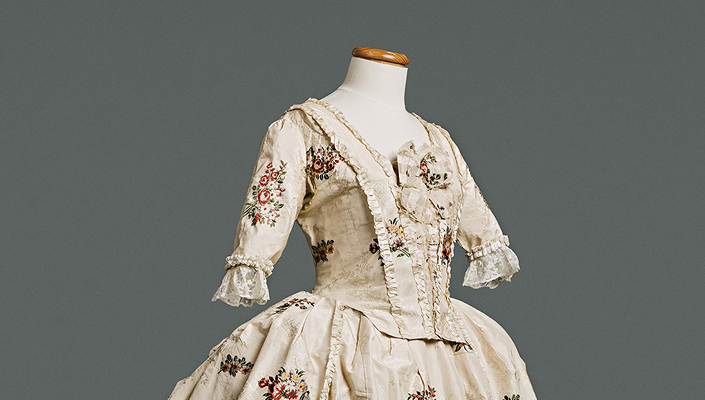
    A robe à l’anglaise gown on a mannequin. The top of the gown is shown with a bodice fitted at front and back, and a waistline marked by a seam. It is cream-coloured with embroidered flowers, and frilly lace cuffs.

    Just as fashion constantly evolves, it is continuously informed and held together by a common thread: the past. This exhibit highlights the importance of collecting and preserving the clothing of the past in order to inform the future.

  • Mirror Image

    Clothing as a reflection of the times.

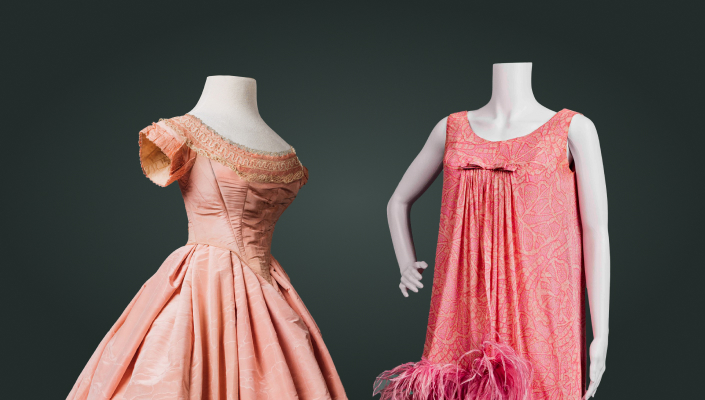
    Two pink dresses are shown. One, a formal ball gown with short sleeves from the 1860s, the other a short, sleeveless cocktail dress with ostrich feather trim, from the 1960s.

    Clothing is a reflection of the time in which it was created. This exhibit examines two distinct periods in fashion history through the lens of two dresses, comparing the design styles, materials used, and construction techniques of clothing made in each period, and positioning those factors within the social, political, and cultural context of each period.

  • Woven Together

    Stories that unfold the fabric of the past.

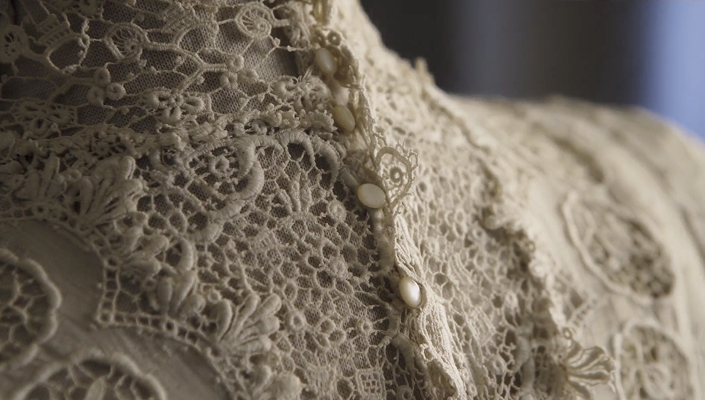
    Details of the neckline of a 1930s wedding dress, showing intricate lace embroidery and small ivory-coloured buttons.

    Historical artefacts gain much of their power and relevance from the stories attached to them. In this exhibit we examine a selection of garments, which on their own are not terribly important, but when examined through the experiences of the people who wore them, take on historical significance.

  • Deconstructing Worth

    The making of early haute couture.

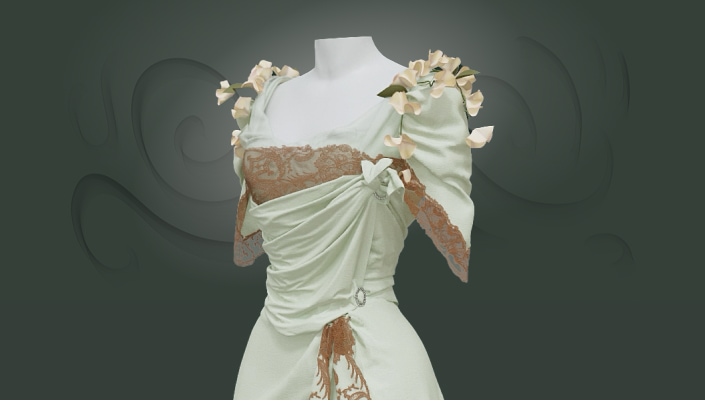
    The back side of a couture evening gown made of mint-green skirt and bodice made from four types of silk in the same colour, with surface decorations of cotton lace and convolvulus (morning glory) flowers.

    How clothing is made constantly evolves, and can tell us much about a particular place and time. This exhibit invites users to examine how one historical couture dress—an evening gown designed in Paris by Charles Frederick Worth in 1900—was constructed.

education icon Educational Resources

Students and educators can find pathways to additional information and learning opportunities including lesson plans, worksheets and activities, and links to other online resources.

Learn More

info icon About the Project

Learn about the genesis of this exhibition, its goals, and team behind it.

Learn More