
 Mirror Image
We can use fashion to define and orient ourselves in time.
When we view people from the past in paintings, photographs, and films, their clothing tells us something about the times in which they lived. A toga and laurel wreath take us back to Ancient Rome; a flapper dress and cloche hat, the roaring 20s; while bell bottom jeans and sandals evoke the 1970s.
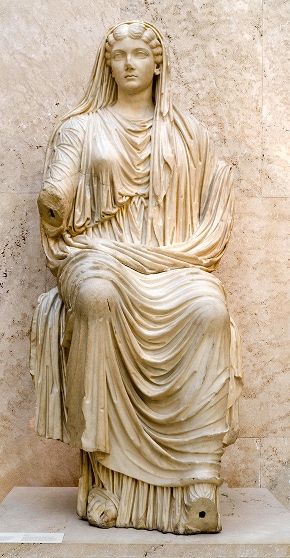
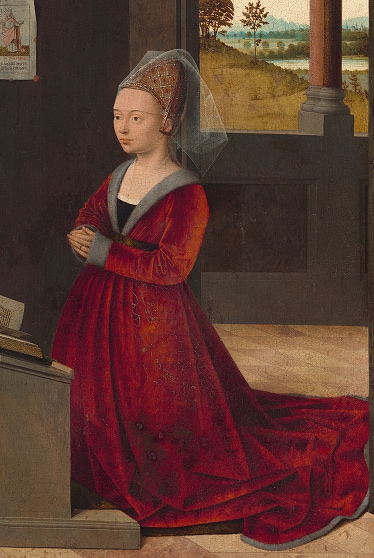
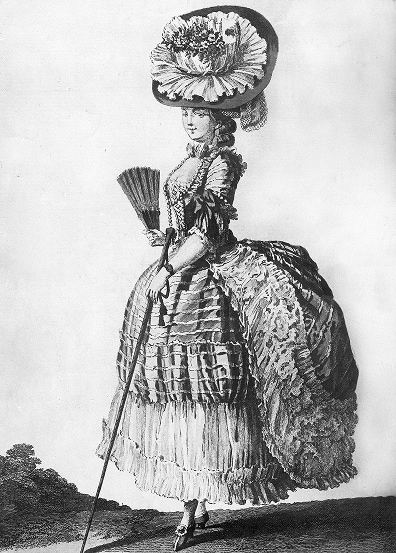
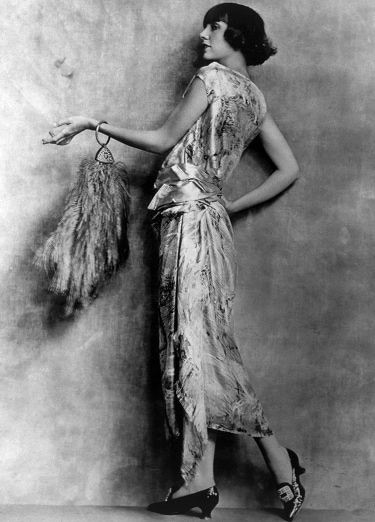
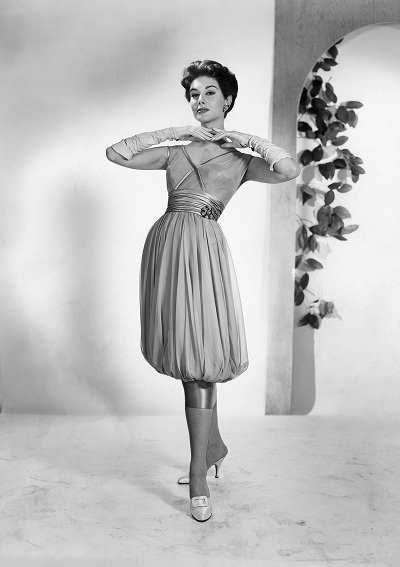
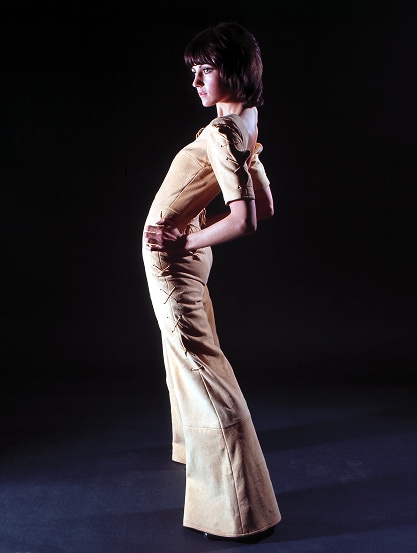
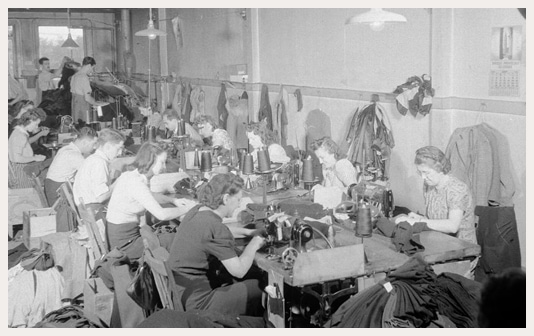
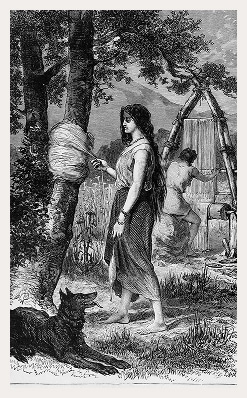
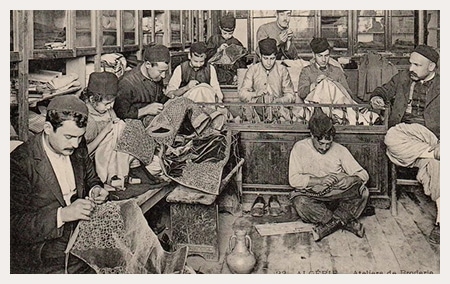
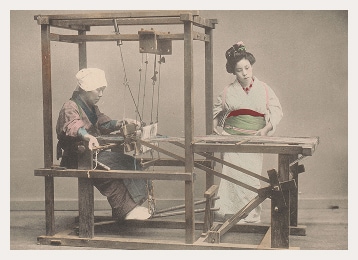
Fashion reflects the time from which it comes. Furthermore, clothing is always produced within the limitations of materials and technology available in any given period, and will usually reflect the culture and values of the era in which it was created.
Studying fashion history enriches our understanding of how people lived in the past.
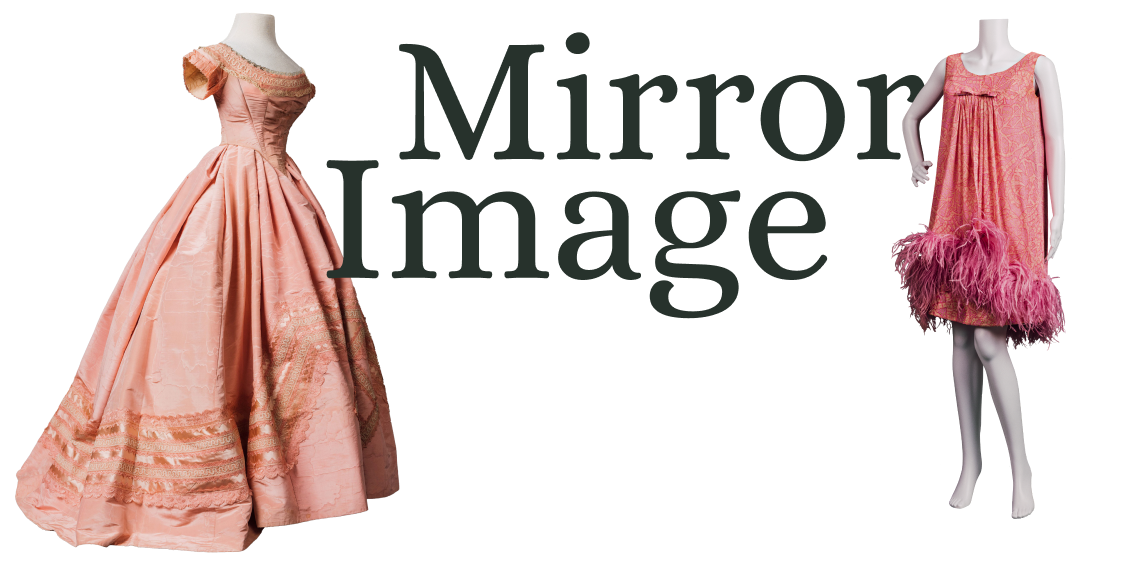
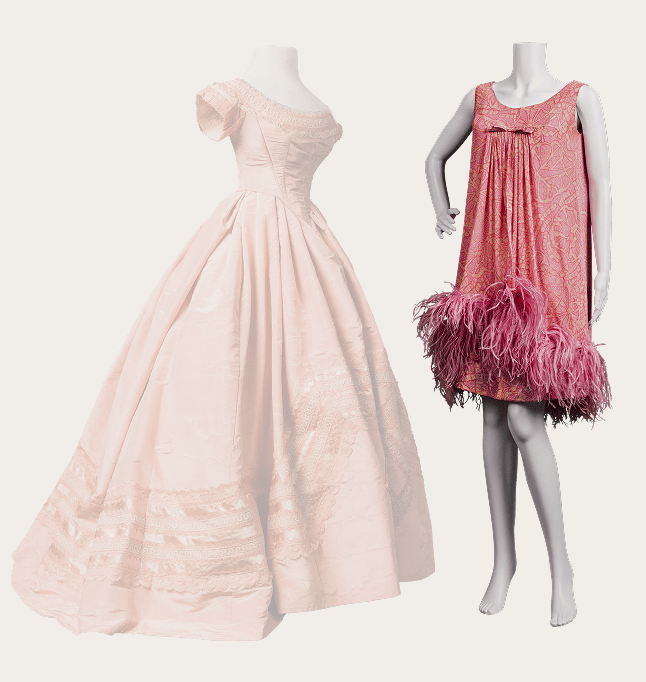
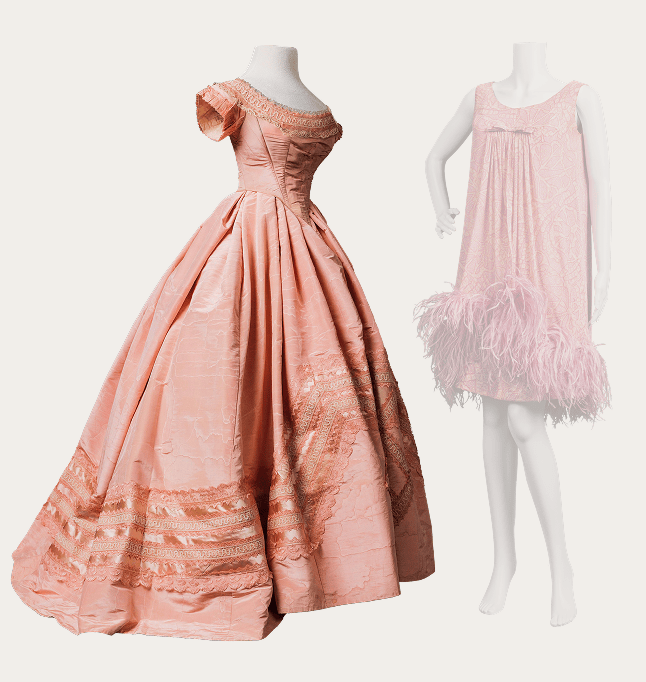
Let’s look at two dresses.
Both are high quality, made of pink silk, and designed for celebration. Yet, it’s clear that they are very different.
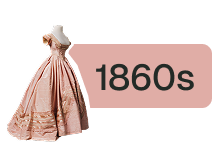
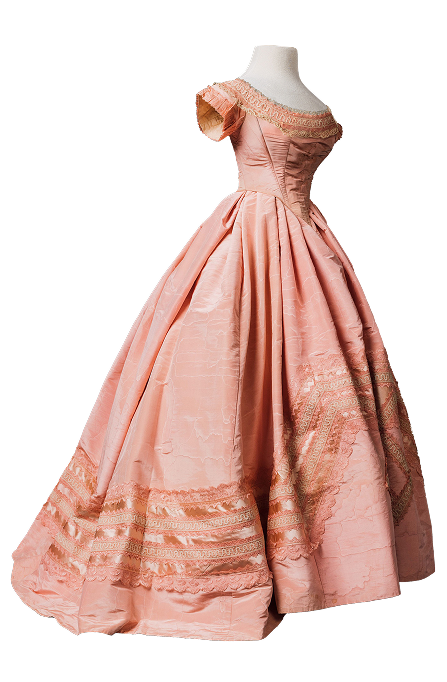
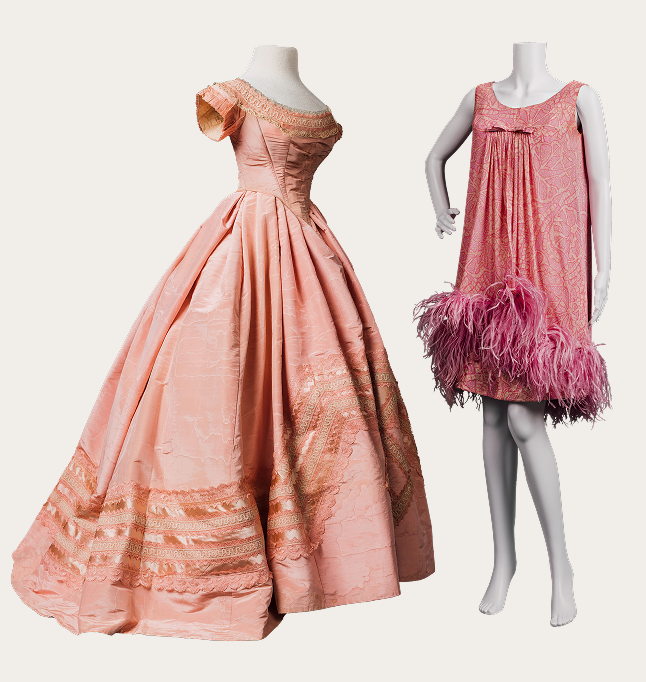
The first is an evening dress made c. 1863.
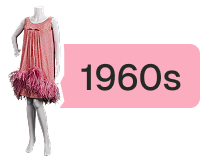
The other garment is a cocktail dress, c. 1965.
The two garments were made around a hundred years apart, but both reflect the times in which they were created.
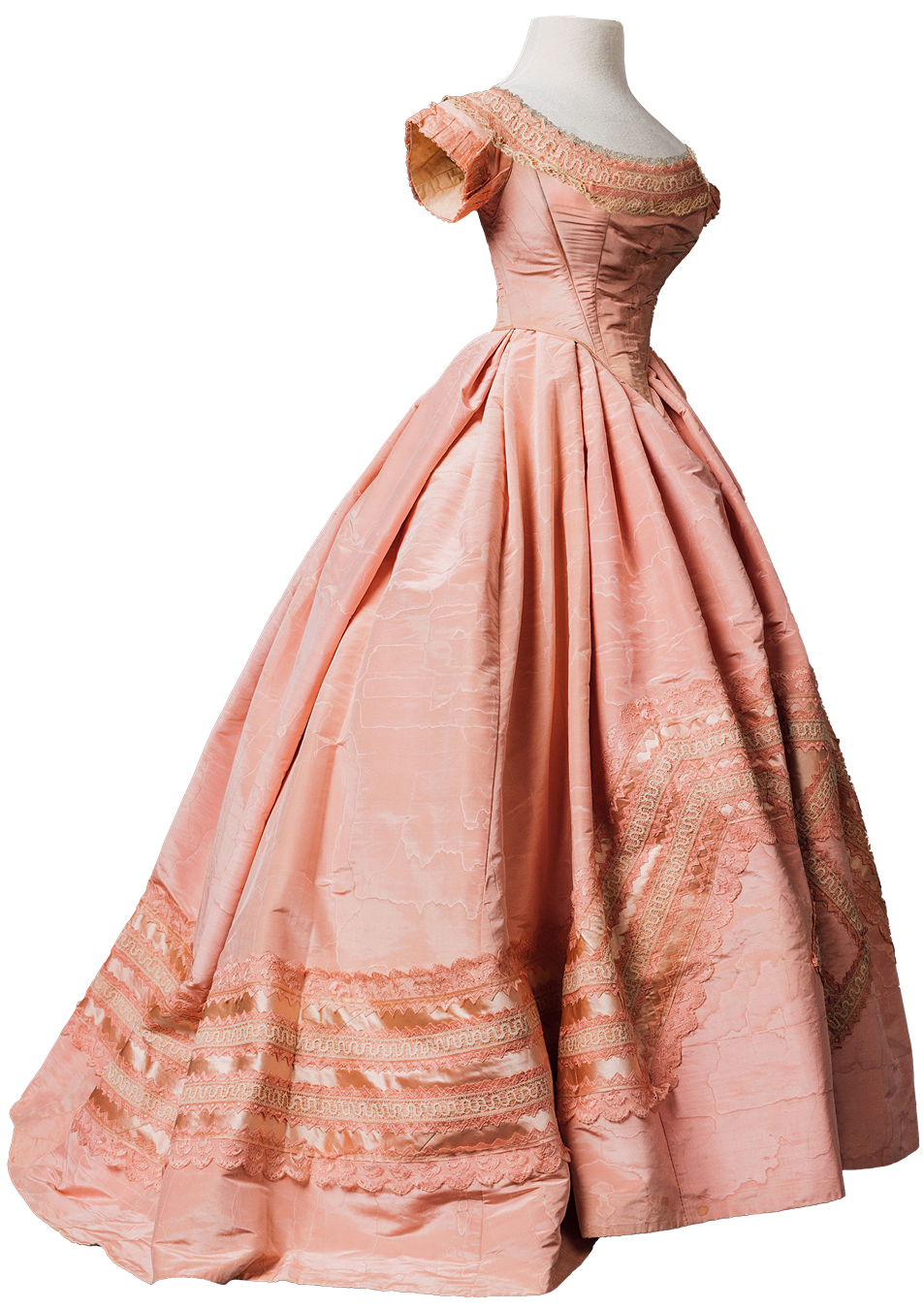
Evening dress
Unknown maker, Italy, c. 1863
This evening dress is a prime example of 1860s high fashion and is thought to have been made in Italy. The bodice is tightly fitted, with a low neckline and short sleeves. The bodice is stiffened with steel or baleen boning and laces snugly down the centre back. The skirt is large and triangular, made of wedge-shaped panels rather than square, to create a full skirt at the hem with less bulk at the waist.
This makes the waistline look small which was thought to make the wearer more feminine and more attractive. The volume of fabric in the skirt made the woman more objectified and also demonstrated financial status; i.e. she could afford enormous amounts of expensive fabric.
In the 1860s, fashionable women typically wore evening dresses to attend balls, court events, and other important social gatherings.
The dresses were often elaborately decorated and usually featured low necklines and short sleeves, and were complemented with jewelry, shawls and gloves. Voluminous skirts, supported by hoops and crinolines, created a dramatic, elegant silhouette. The wearer was expected to be graceful and poised. The qualities of her dress and her manner of wearing it illustrated her character, as well as her social and economic position.
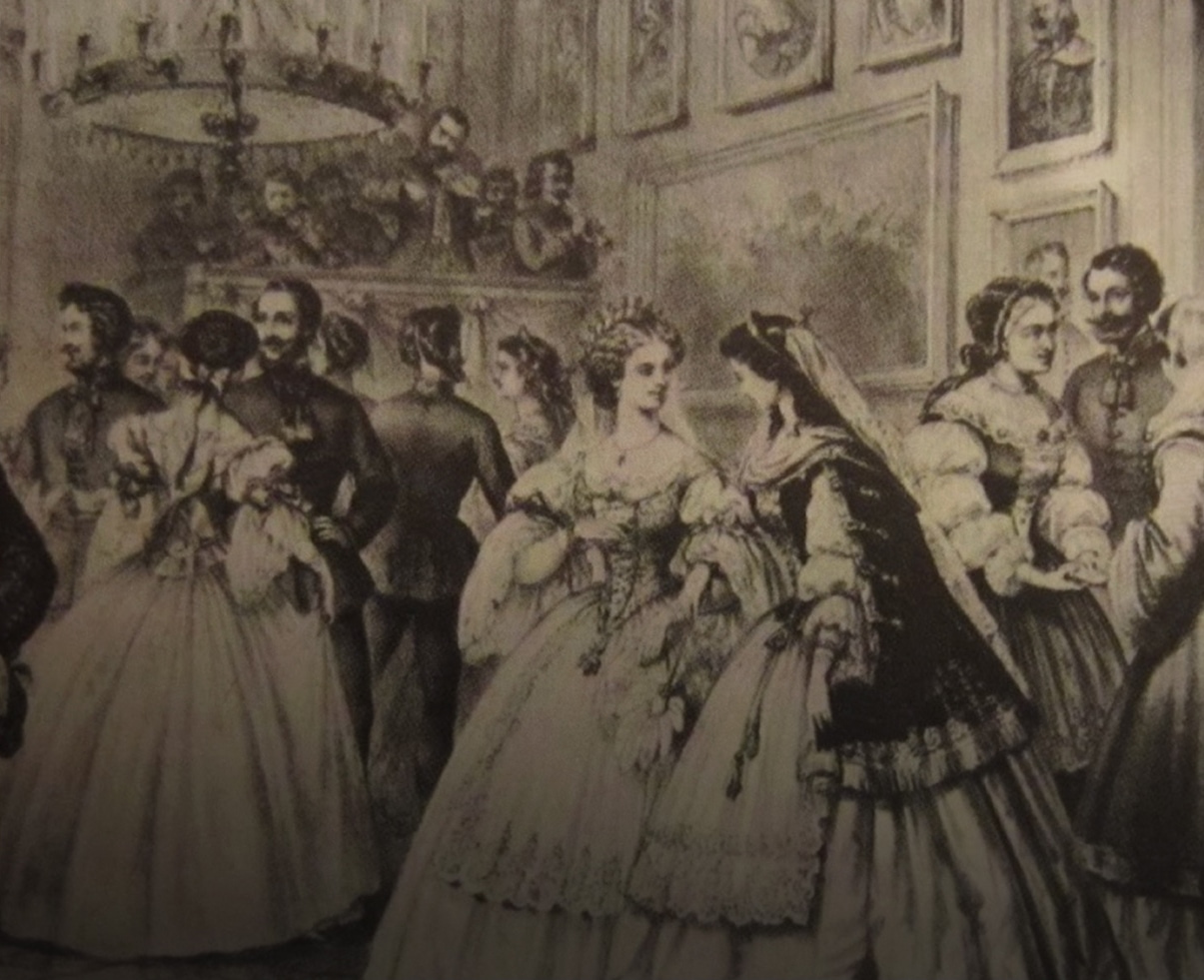
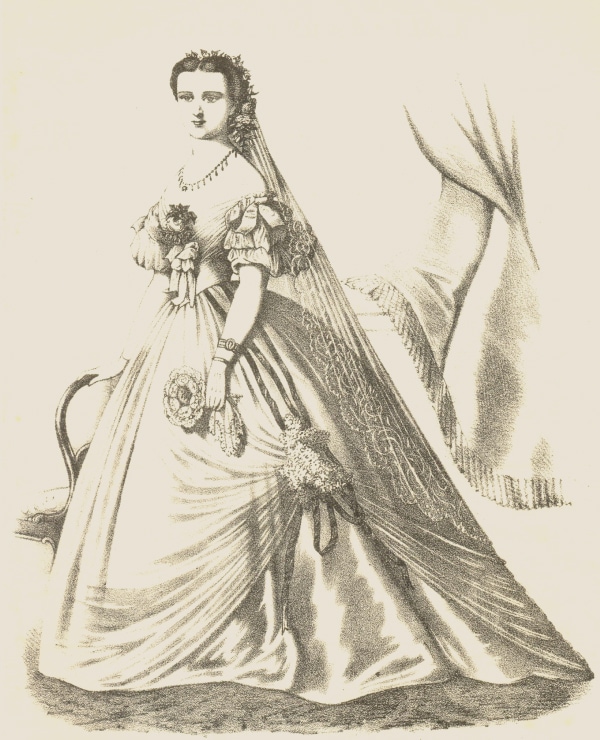
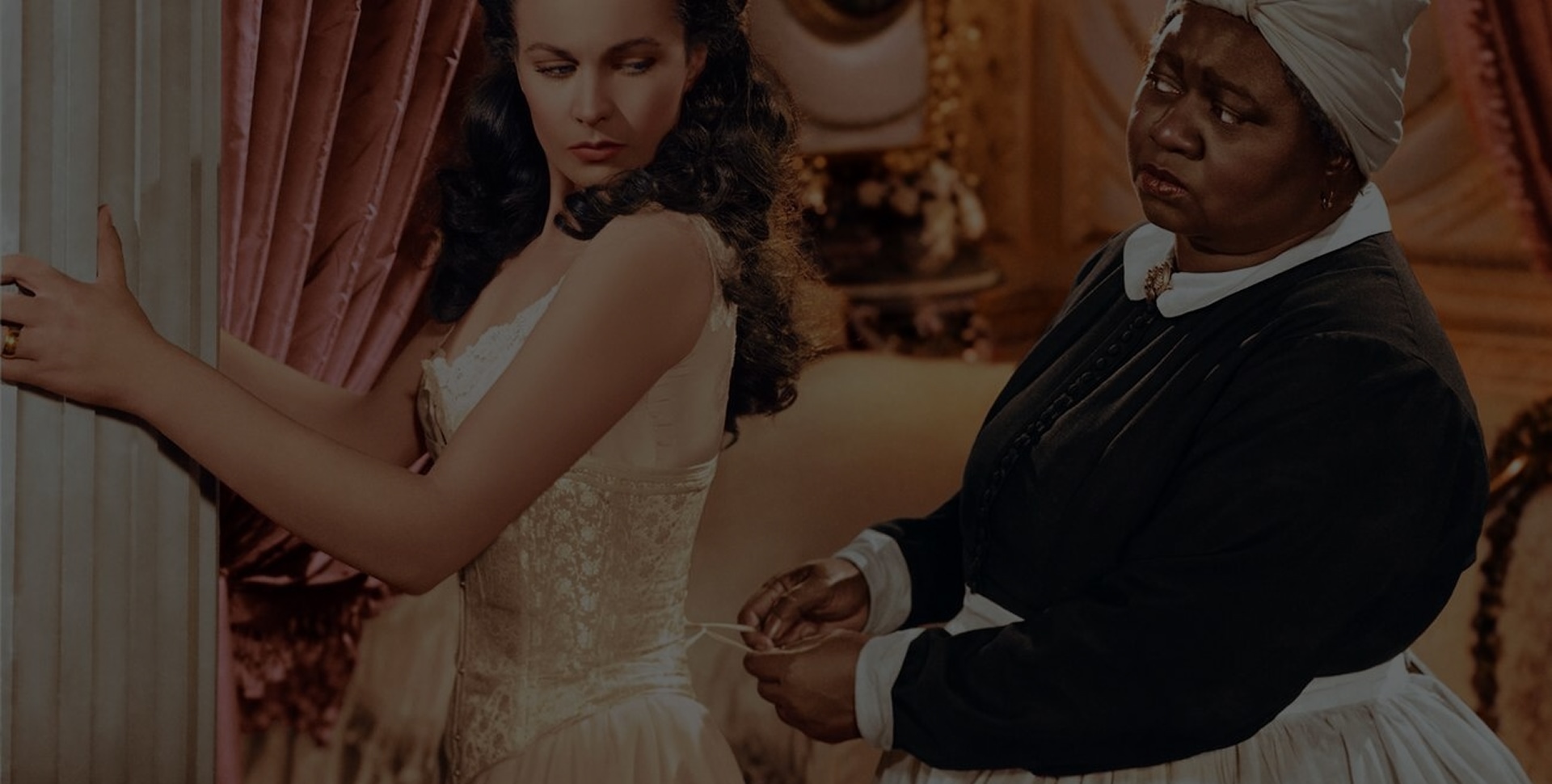
These dresses could be beautiful but were not necessarily comfortable. The look was dependent on very tight corsets and massive, awkward hoops and petticoats.
Beauty demanded physical discomfort.
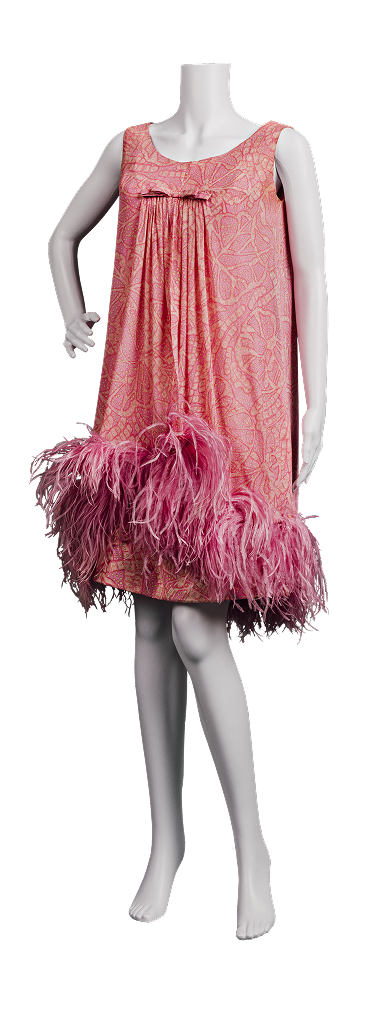
Cocktail dress
by Heinz Oestergaard, Berlin, Germany, c. 1965
This frothy, yet elegant, party dress was designed in the 1960s and features a foulard silk shift printed with the same paisley pattern used on the chiffon overdress. The loose, A-line cut gives the wearer full freedom of movement. The short hem draws attention to the legs, not the waist, and the frivolous pink feathers blend minimalism with opulence.
It was designed by Heinz Oestergaard, one of Germany’s most important post-World War II fashion designers.
In the 1960s, the cocktail dress bridged the gap between daywear and evening attire.
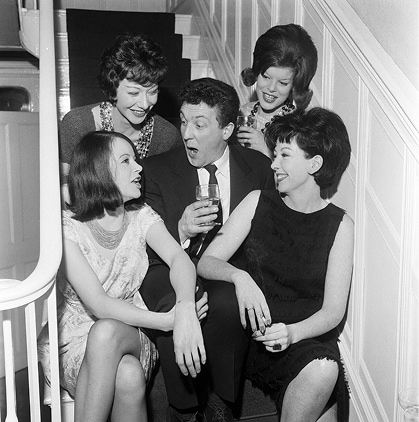
Often fabricated with bright colors and playful prints, cocktail dresses were polished enough for parties and social events, without the formality of a full evening gown. As women gained more freedom, both at home and in the public sphere, these dresses enabled them to express their personal style without overstepping social conventions.
The pink cocktail dress is of expensive boutique quality.
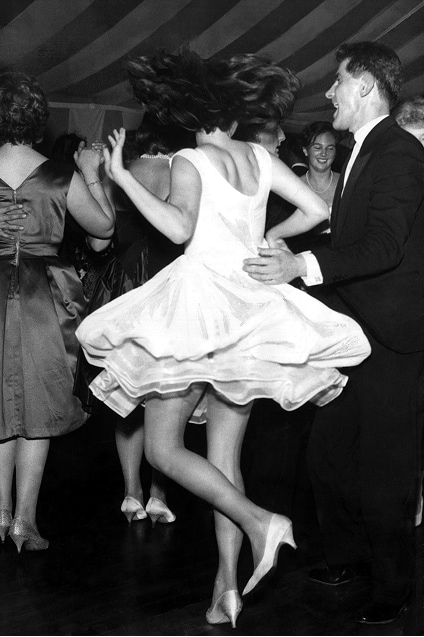
It would have been trendy, current ready-to-wear fashion. It would have been suitable for cocktail parties, night clubs, fine restaurants in the evening, and for dancing in the newly popular discos.
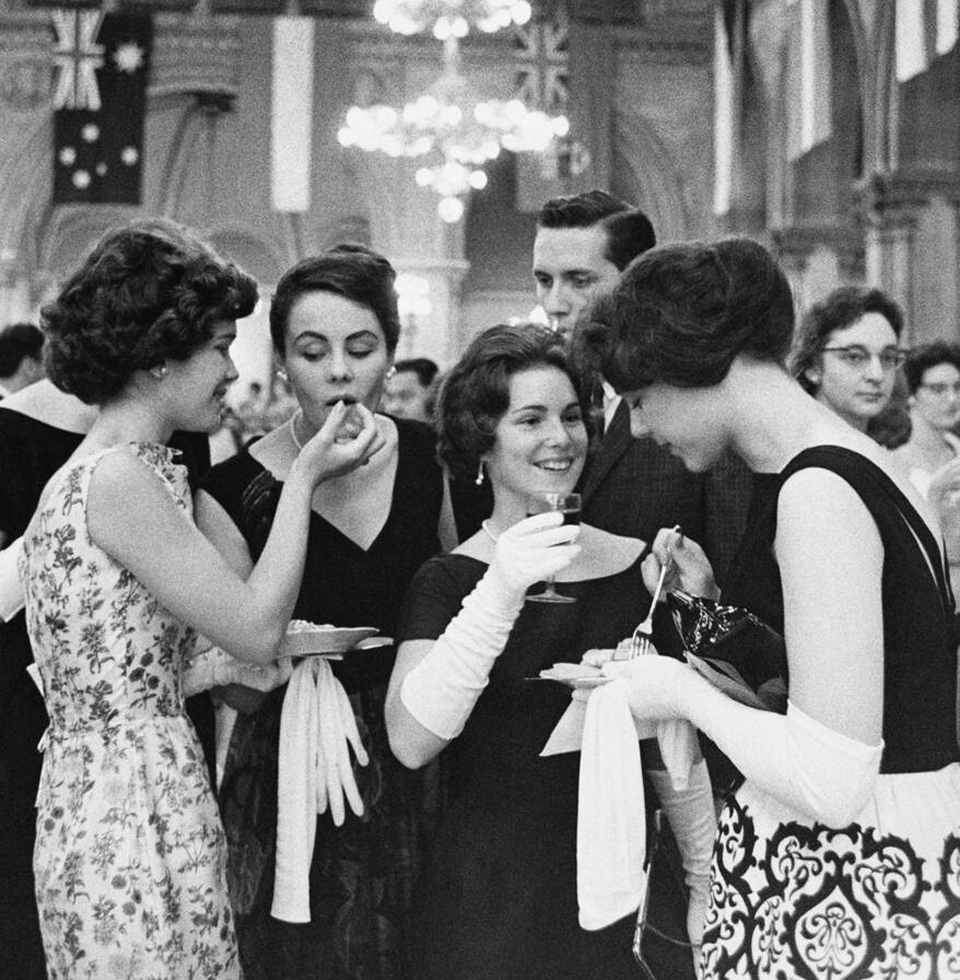
The wearer would have been suitably dressed for sipping wine and eating canapés at an embassy ball, or going to an after-party where the Beatles or Rolling Stones performed.
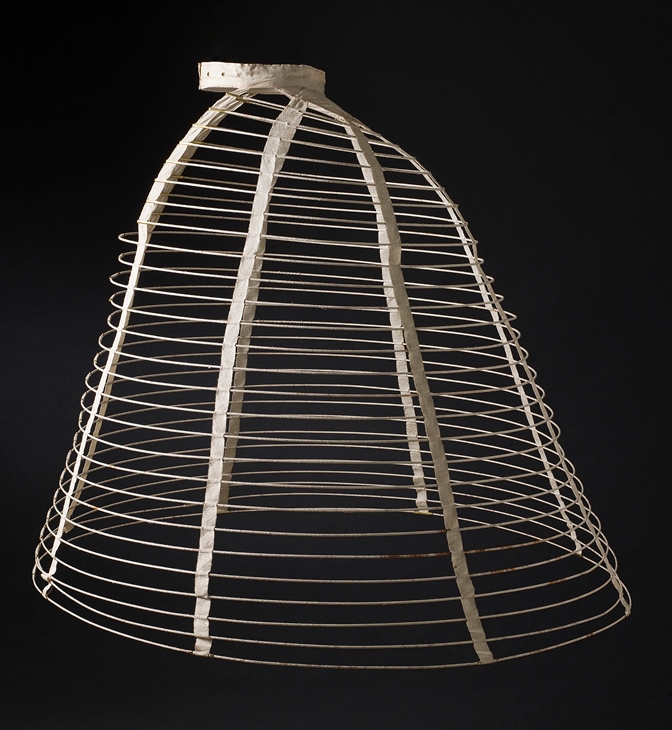
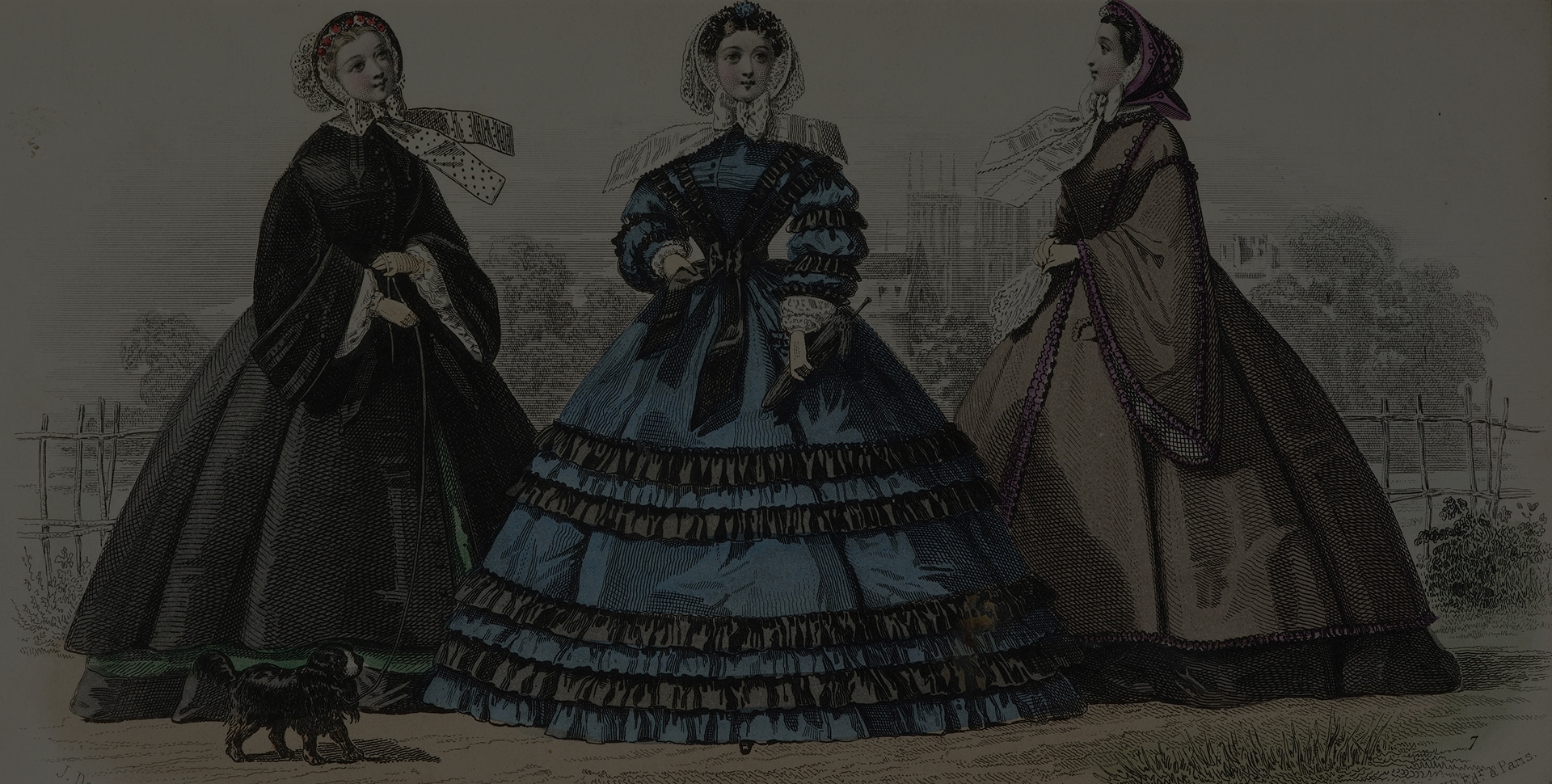
Under the huge skirts, women wore cage hoop underskirts made of spring steel wire.
The hoops created the desired shape and at the time were seen as practical because women did not need layers and layers of underskirts to achieve the bulk considered attractive.
Sometimes one skirt would have more than one bodice or top so it could be worn for more than one occasion.
Daytime bodices typically had high necklines and long sleeves. Evening dresses had low, wide necklines and short sleeves. Necklines were often decorated with gathered bands of lace or ribbons, or trimmed with lace curtain-style collars called berthas.
This evening dress is probably Italian, but it is typical of fashionable dress anywhere in the world where European fashion was worn. By the 1860s, sea travel and shipping spread fashion news from Europe to North America, Africa and Asia within weeks.
The Modern Style of the 1960s
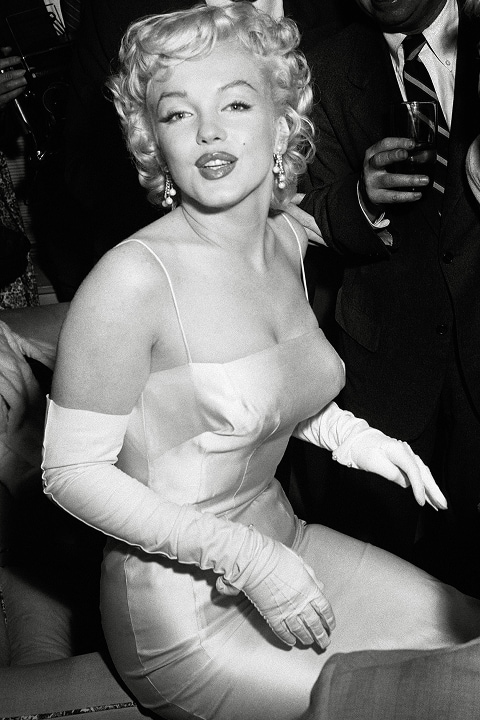
As the 1950s ended, form fitting styles were the norm. Fashion icons were women like Queen Elizabeth, or movie stars like Marilyn Monroe or Grace Kelly. Women often wore high heeled shoes, hats and gloves for many even casual situations.
In the mid-1960s fashion took a dramatic, more youthful turn as London replaced Paris as the trend-setting city.
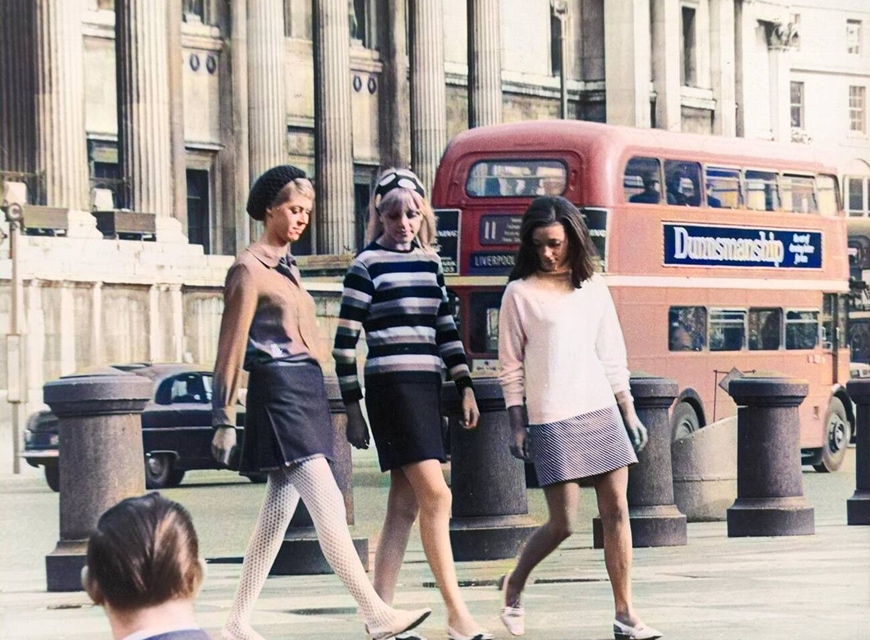
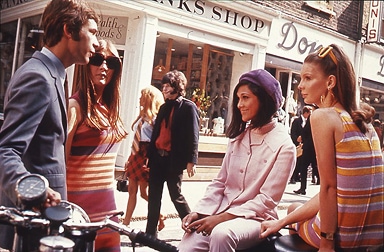
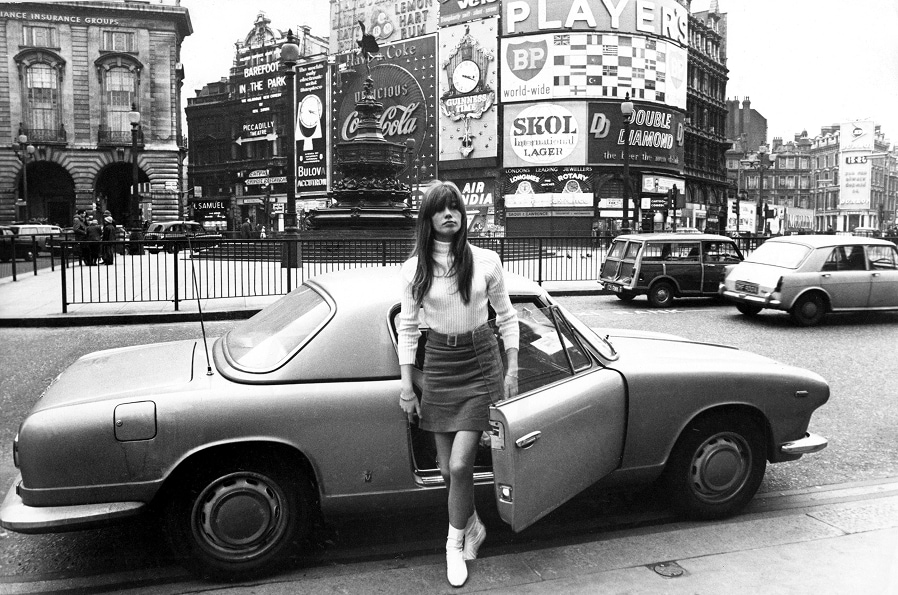
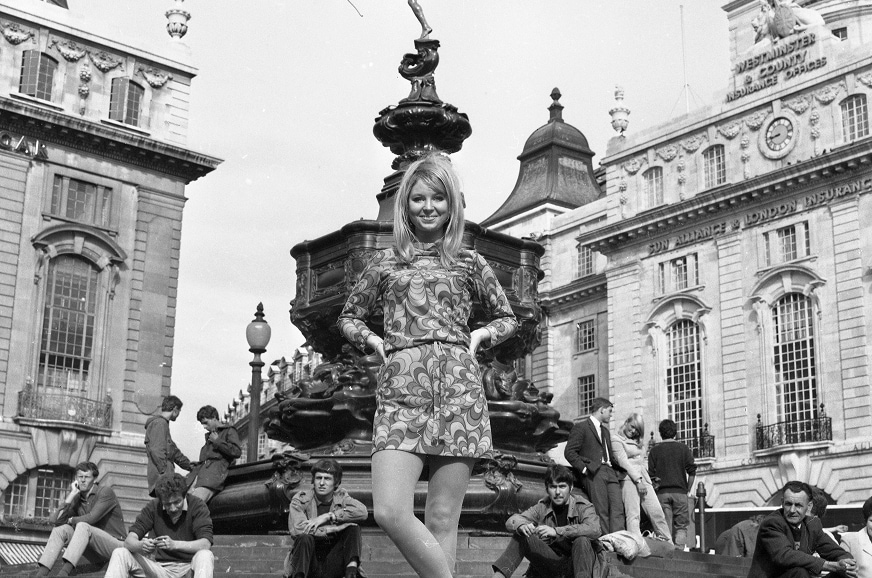
The Beatles and mod culture spread like wildfire.
Miniskirts, trapeze dresses, and A-line cuts (like our cocktail dress), replaced the more matronly styles popular before 1960.
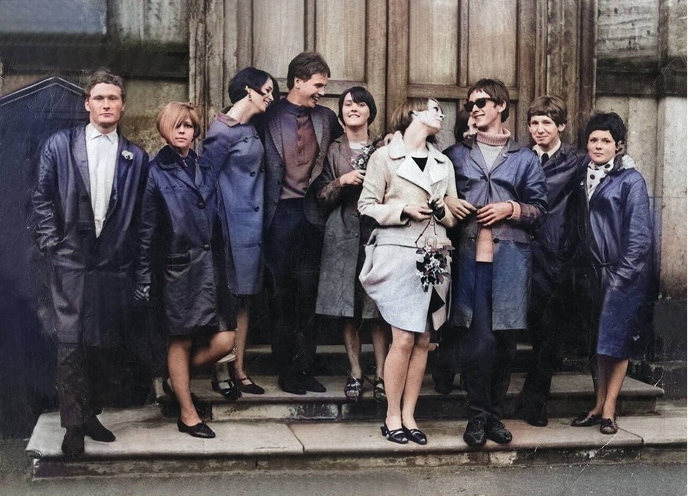
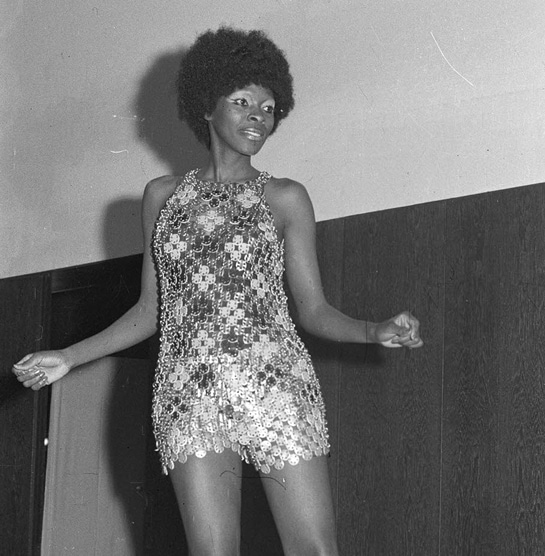
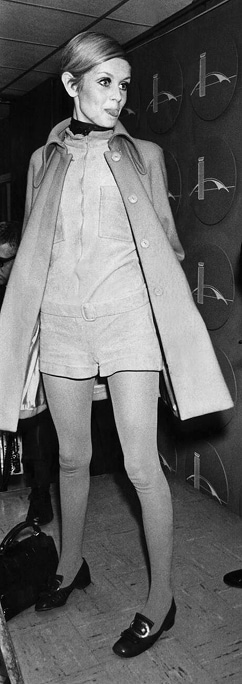
The technological advances in fabric development and garment construction led to the introduction of pantyhose, just in time to coordinate with short skirts that couldn’t be worn with stockings and garters.
Very young fashion models like Twiggy in London embodied the vitality and freedom of the modern woman, with alarmingly short skirts, but still modestly covered up by pantyhose.
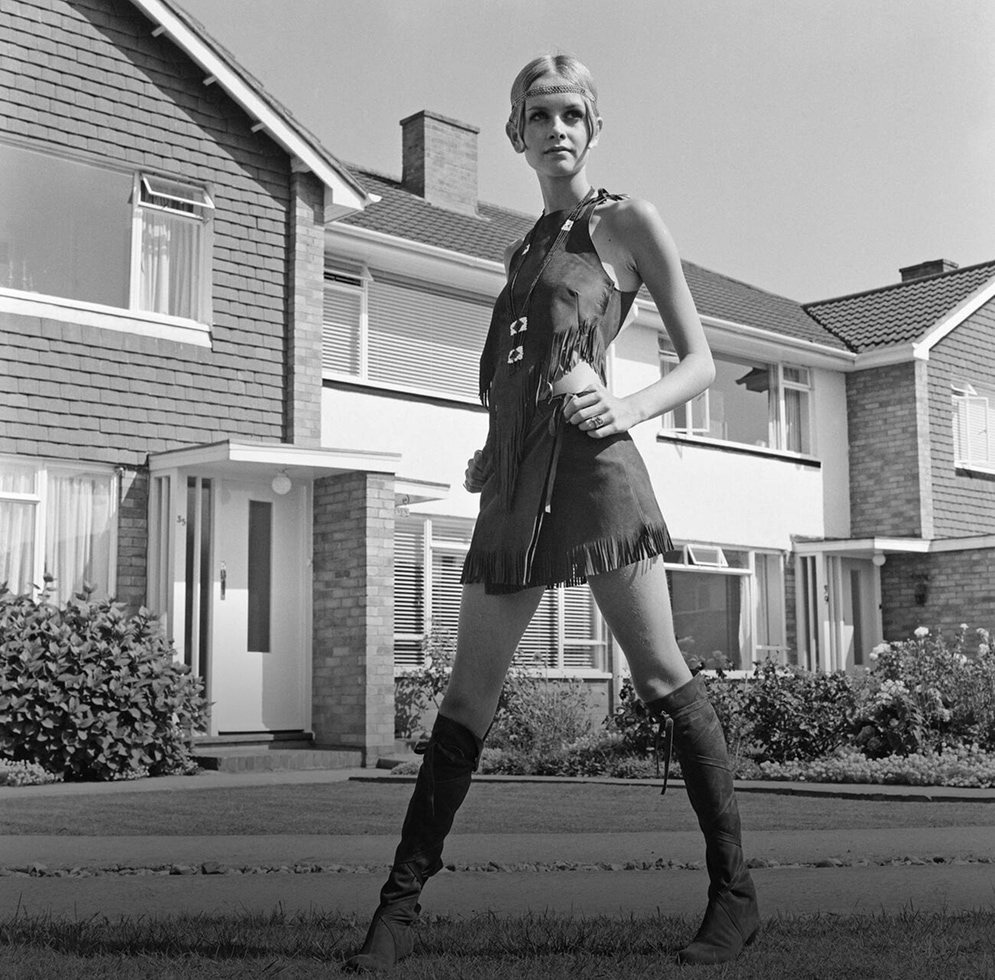
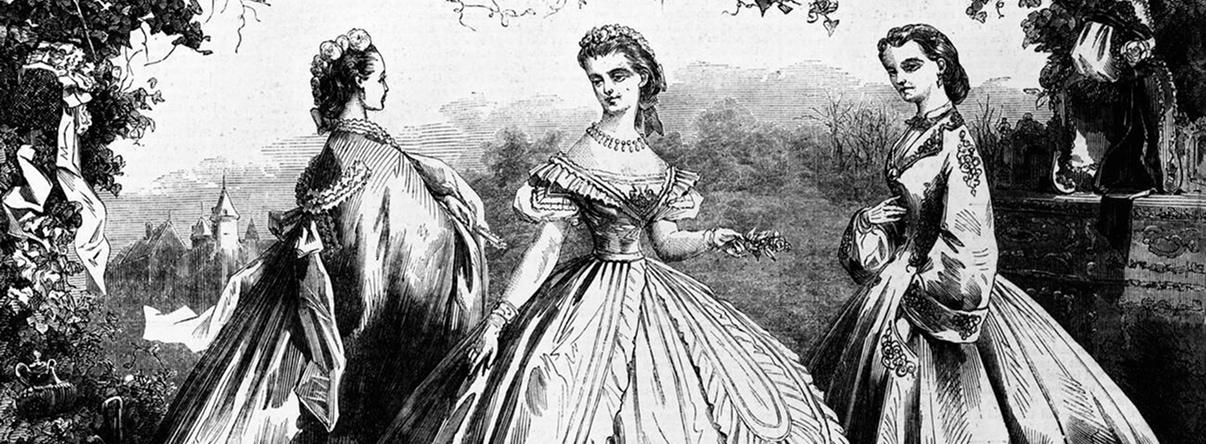
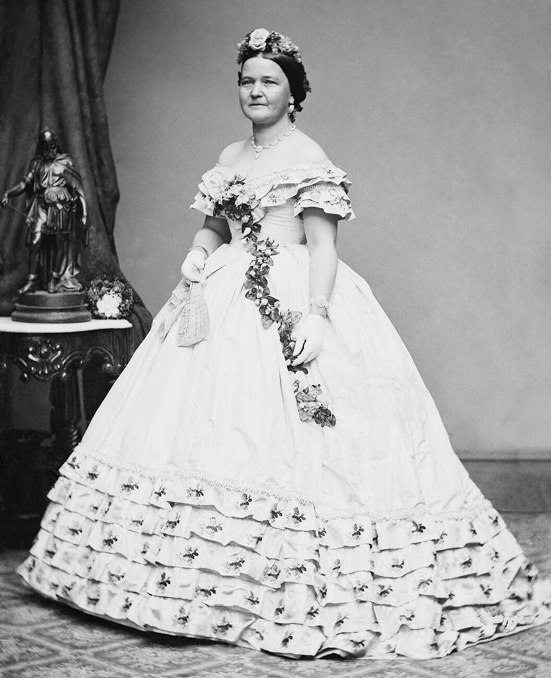
Evening dresses like the one we are examining, had wide, low necklines, often elaborately trimmed, which contrasted with the corseted waistline and made it seem even smaller.
Sleeves were short and likewise often decorated with lace, ribbons, and beading.
Popular daytime accessories included shawls, jackets, bonnets, and gloves.
Evening accessories included the same, but with the addition of finer shawls, fans, and more luxurious jewelry. Women’s hair was grown long, but only worn loose by girls or very young women. An adult woman wore her hair back from her face usually in a bun at the nape of her neck. The bun was often enclosed in a hairnet called a snood when indoors, or covered by a straw or felt bonnet when she left the house.
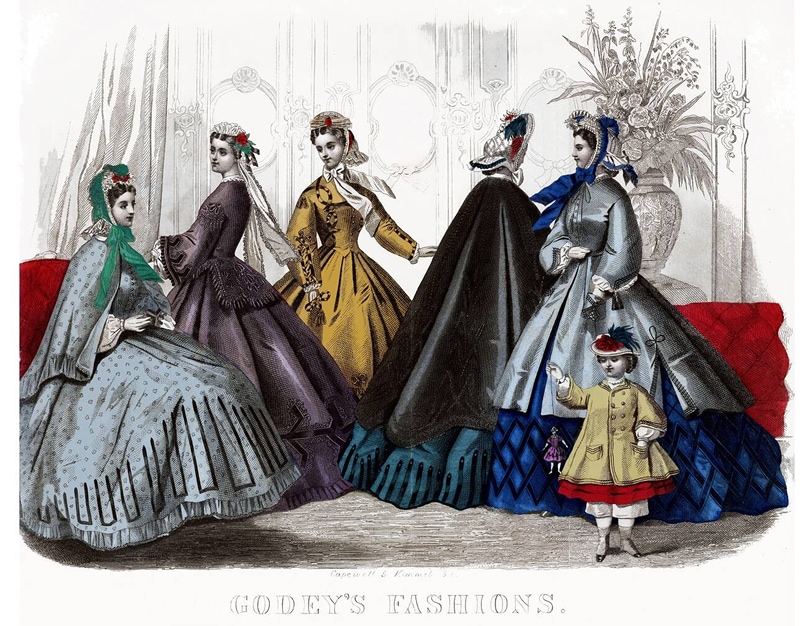
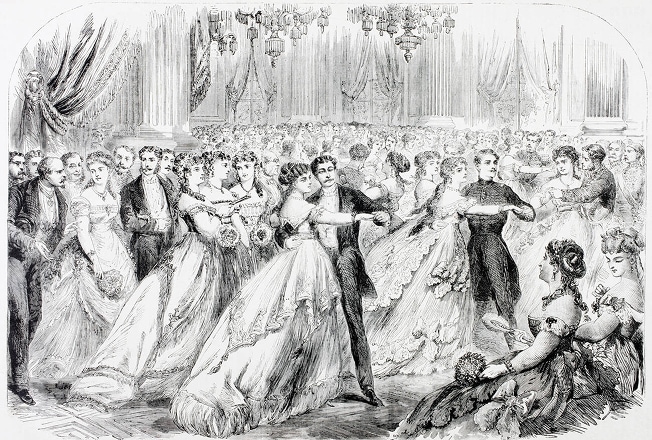
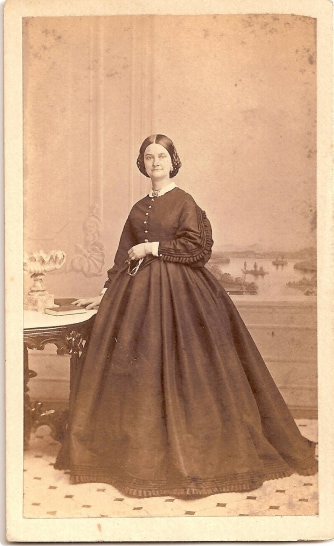
For evening wear, the hair was often worn in twisted braids, augmented with curled ends and puffs, and set with lace caps, jewelry, combs, or flowers.
Defining Trends of the 1960s
The 1960s saw an explosion of fashion trends influenced by politics: the Cold War, the youth culture, and later by street style. The emphasis was not on the past, but of the future and the predicted Space Age that we were all going to enjoy.
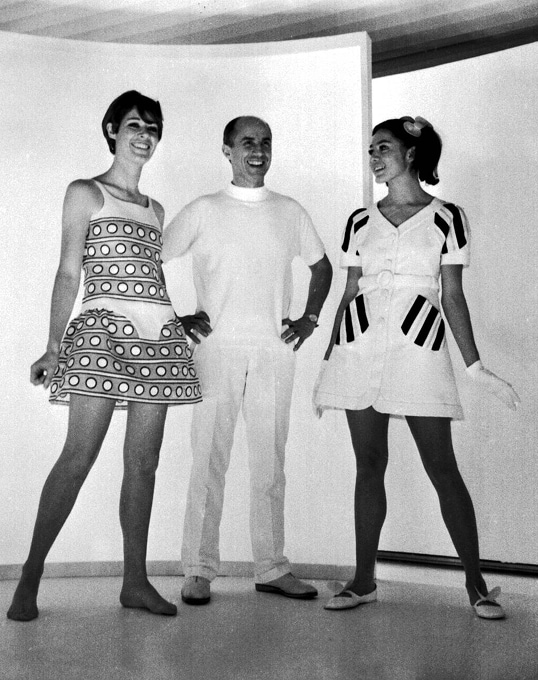
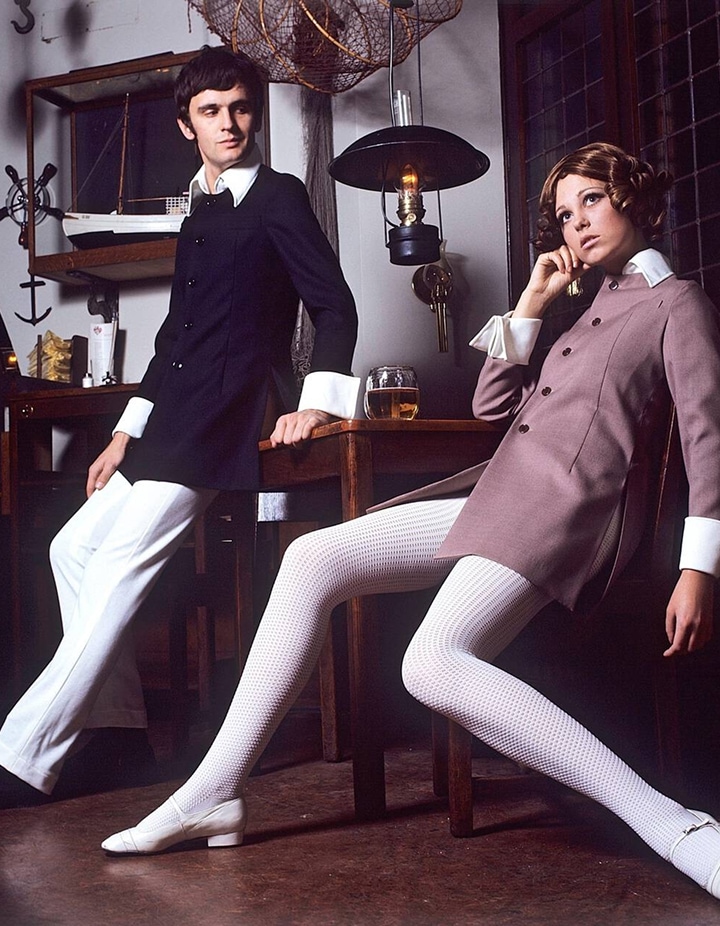
Women wanted to look like girls, men wanted to look like boys.
Gradually unisex influence appeared, and rock bands became a driving force in changing attitudes about how men and women should dress.
This Italian dress would have been custom made by professional dressmakers.
The bodice seams are machine sewn but all seams in the skirt were sewn by hand. The trimming and finishing was also hand done.
Various kinds of sewing machines were introduced in the 1840s and improved in the 1850s.
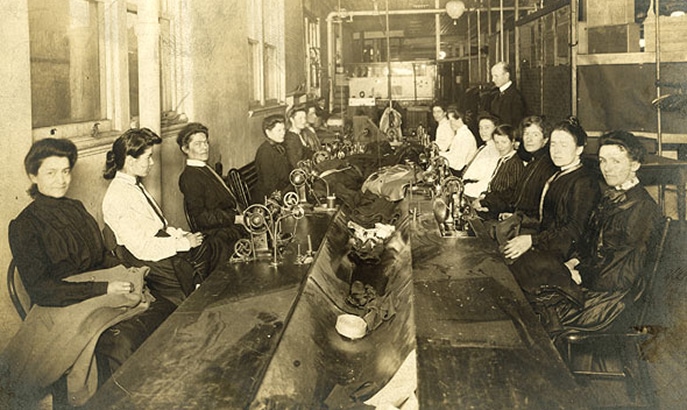
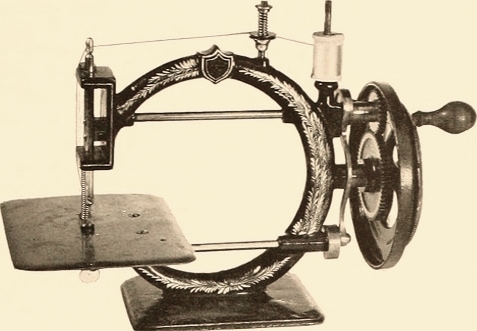
By the 1860s mass produced, efficient sewing machines were readily available and were promoted as a new way for working women to begin their own independent businesses.
This technological advance also made fashion quicker and cheaper to produce which meant it became accessible to a broader audience.
Material and Construction Techniques of the 1960s
By the 1960s technological improvements made silk affordable for all economic classes. However, beautiful fabrics made of rayon, nylon, and polyester were competing successfully with silk.
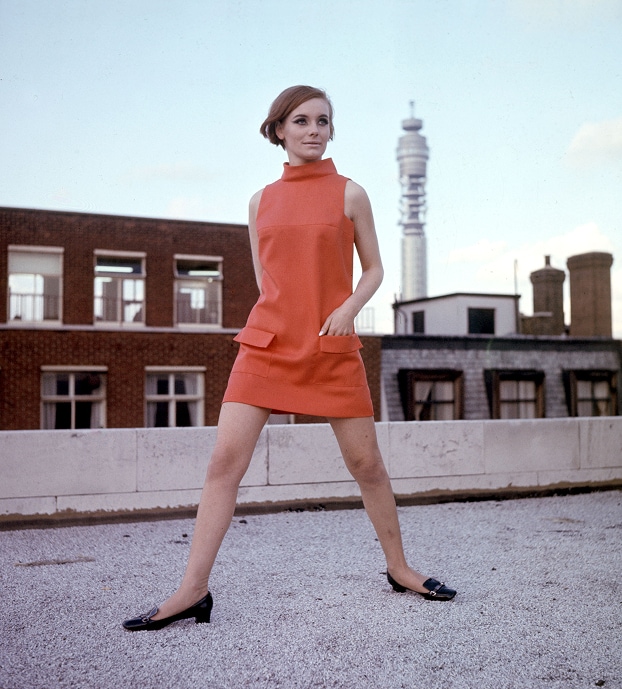
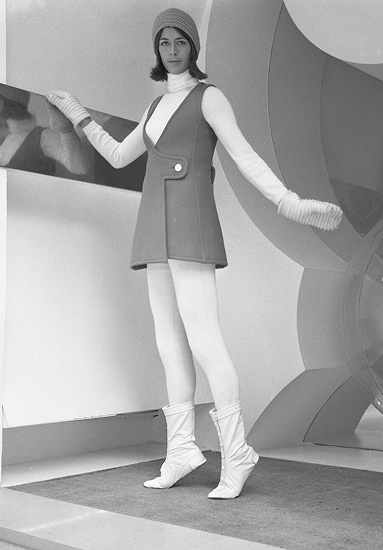
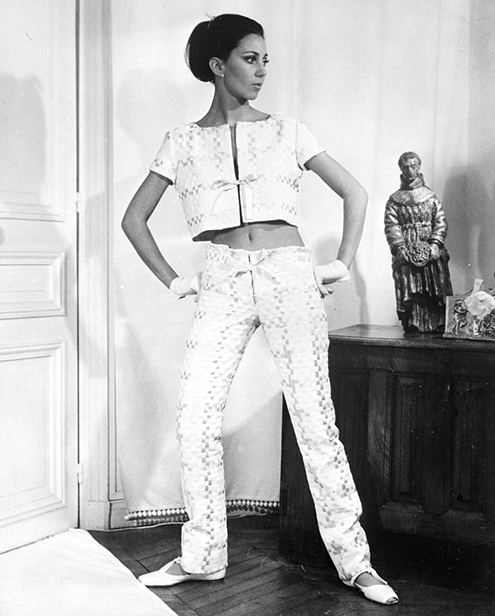
Designers like Mary Quant, Paco Rabanne, Pierre Cardin, and Biba were experimenting with materials such as metal, acrylics, PVC, and other plastics.
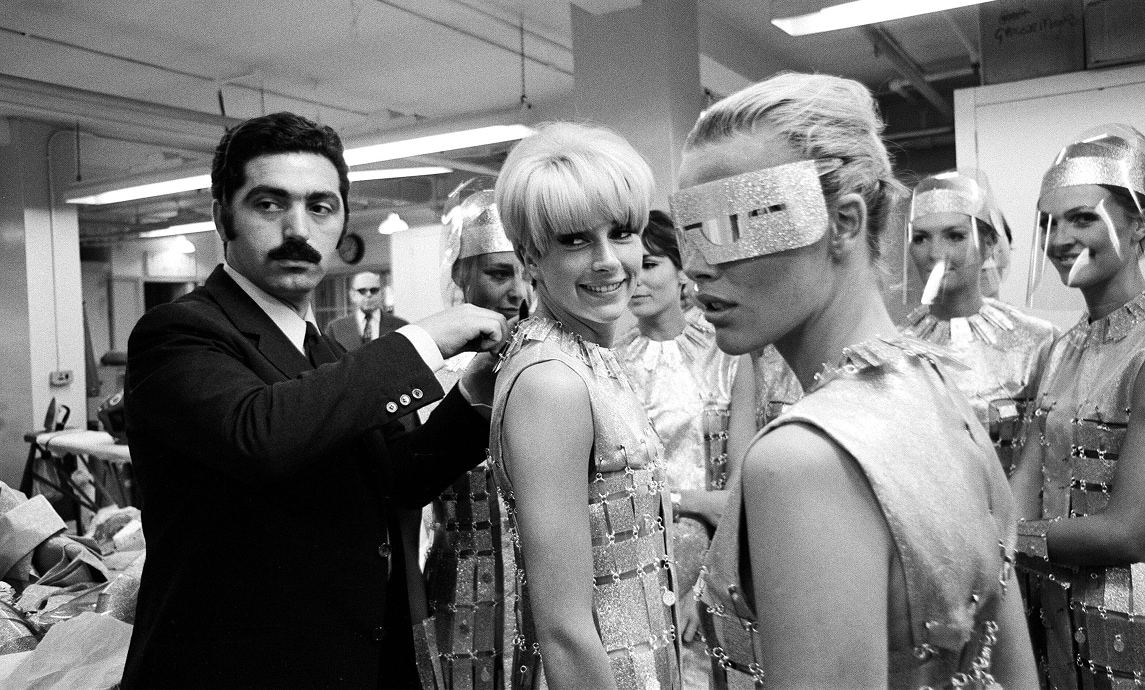
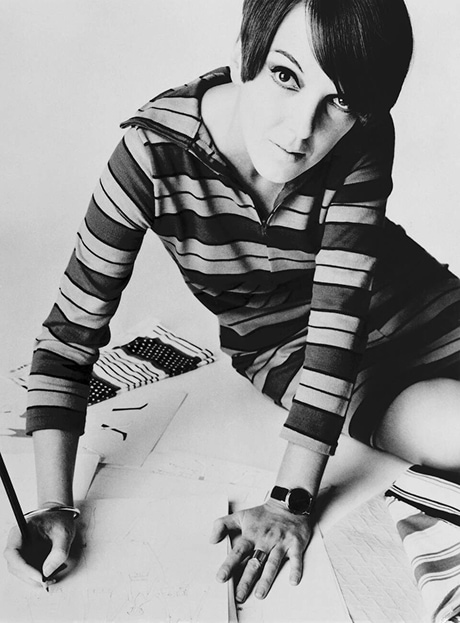
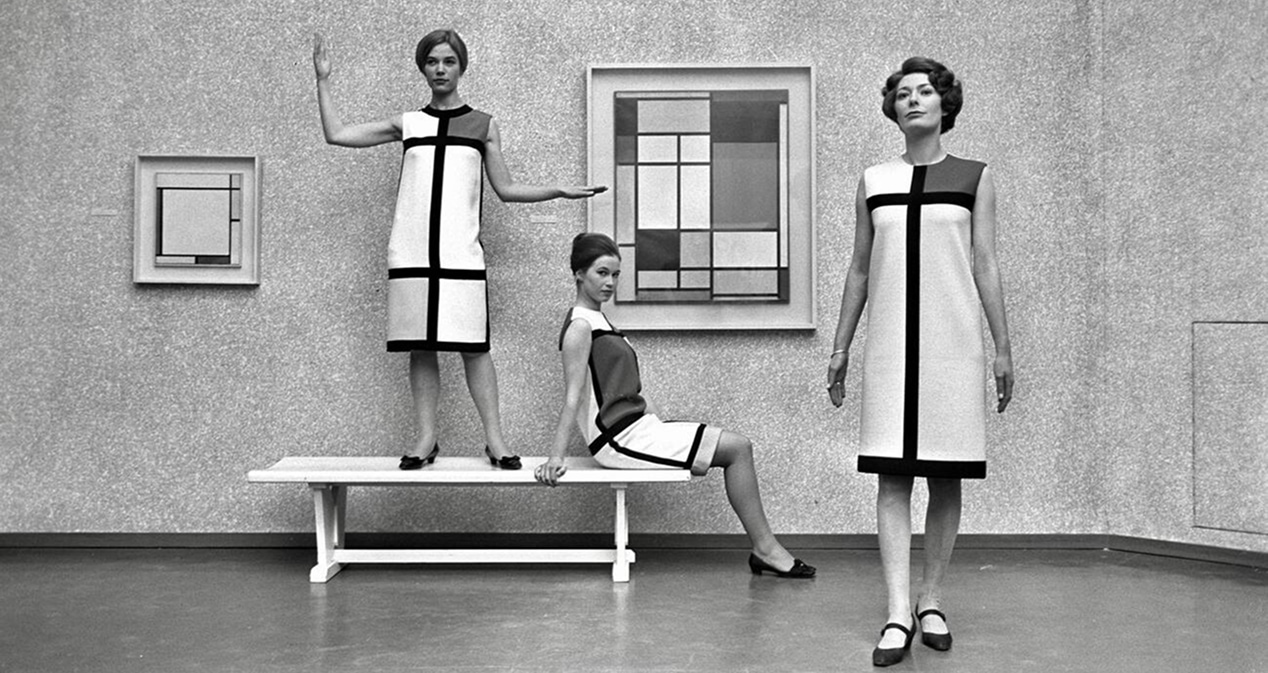
In 1964, André Courrèges introduced his Space Age collection, which included his famous go-go boots. Yves Saint-Laurent produced his African line with garments made primarily of wooden beads in 1967. Another of his collections combined fine art with fashion in his dresses inspired by the geometric paintings of Piet Mondrian.
The dress by Heinz Oetergaard of Berlin is more conservative than some of the French and English designs, but it is current, loosely-fitting, and exposes the knees. The dress is machine sewn and hand finished. The ostrich feather trim adds a touch of frivolity to an otherwise conservative design.
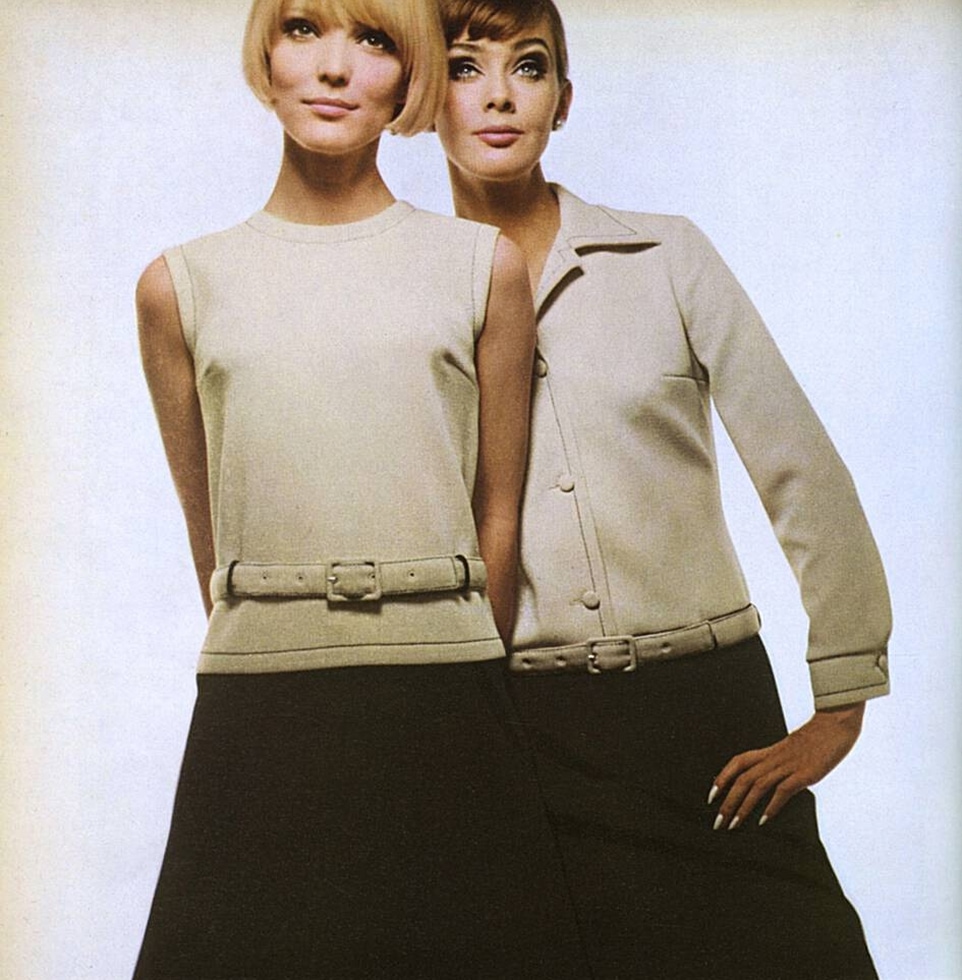
By the end of the 1960s, the couture industry had become less important and boutiques featuring ready-to-wear created by important designers came to dominate the fashion industry. Mass marketing was replacing couture salon exclusivity.
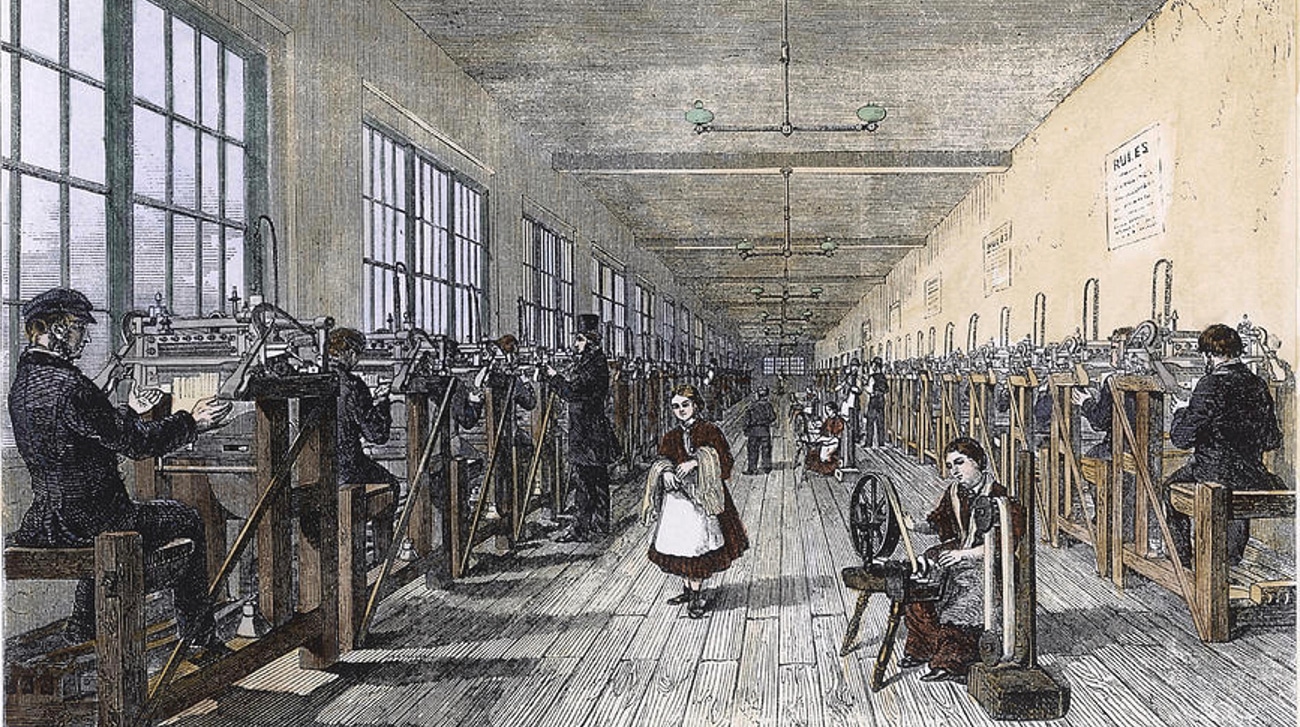
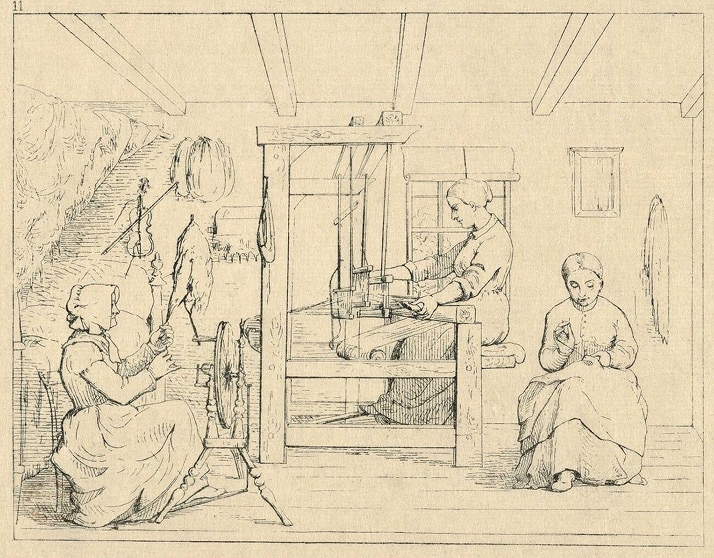
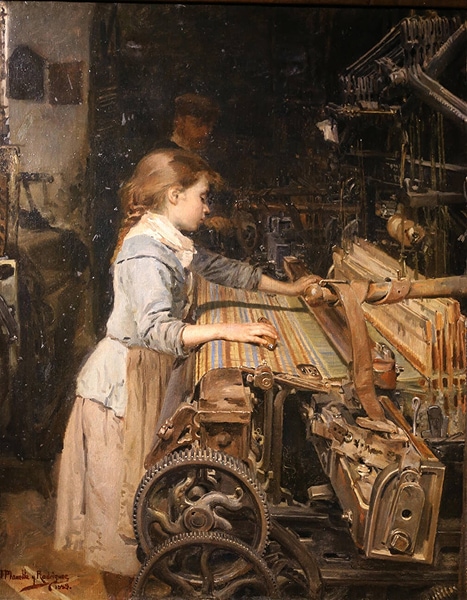
Many working-class women worked as seamstresses to meet the demands of the expanding garment industry.
If not working in factories, they often worked at home for up to sixteen hours a day, stitching piles of pre-cut fabric into garments. Sewing machines eventually speeded up production, but their earnings did not necessarily keep up with productivity.
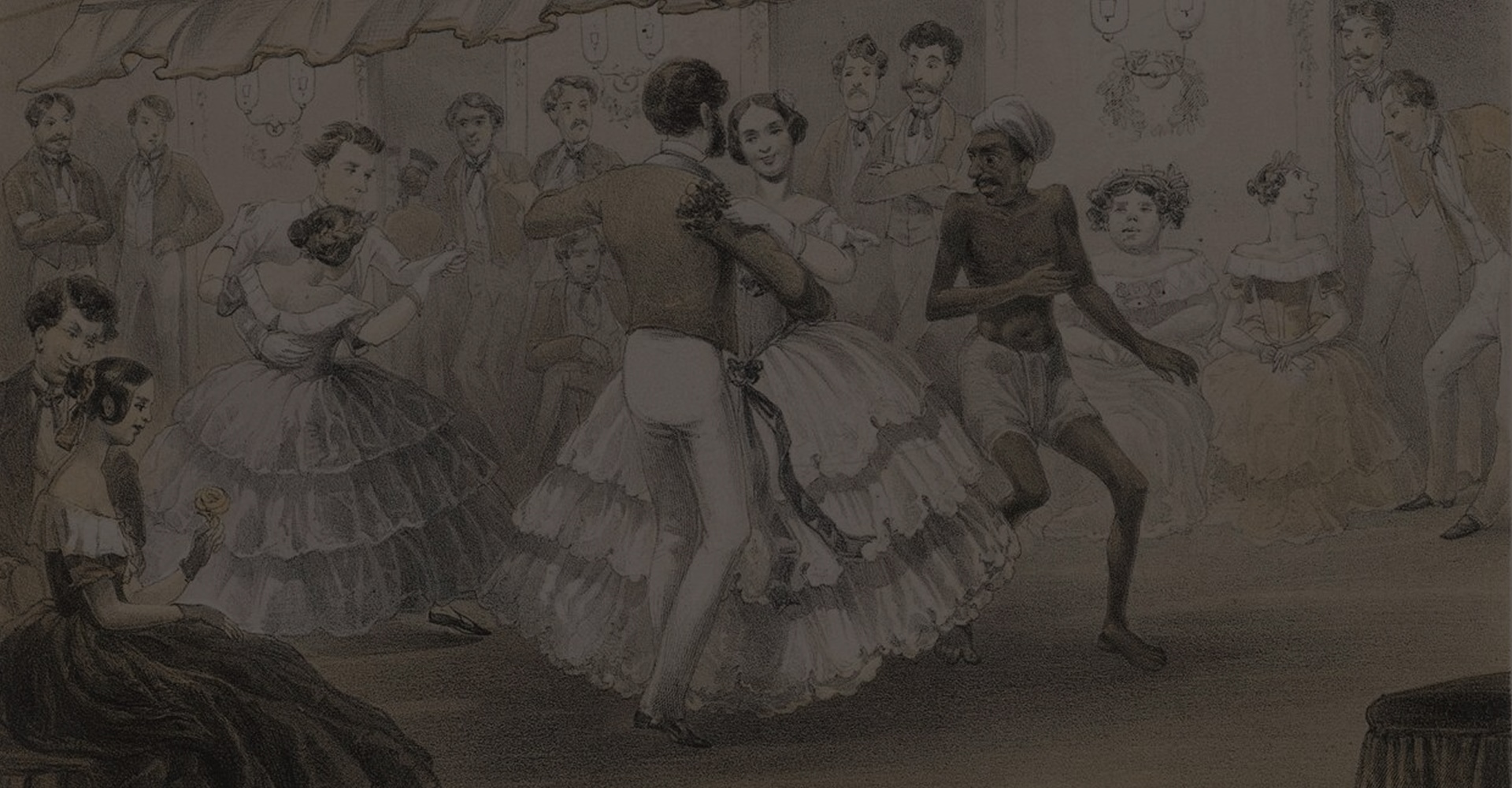
Nationalism in European countries was on the rise which contributed to territorial warfare and unprecedented colonialism. Britain, Germany, Spain, Portugal, Italy, and even Belgium and the Netherlands, had colonies around the globe. A great deal of colonialism was supported by the textile trade.
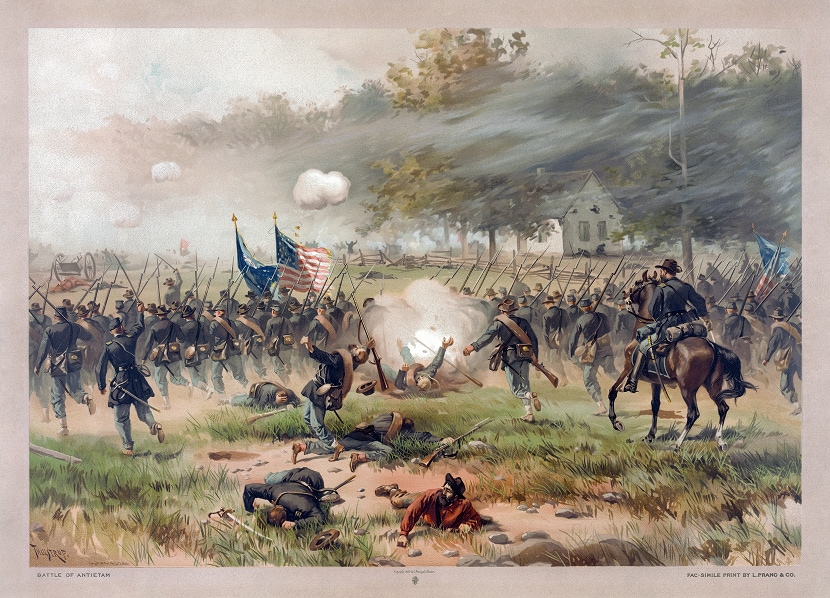
In the United States, years of dispute over slavery came to a head with the election of Abraham Lincoln in 1860.
As a Confederacy of southern states seceded, it sparked a bloody civil war with northern Union states that would dominate the decade.
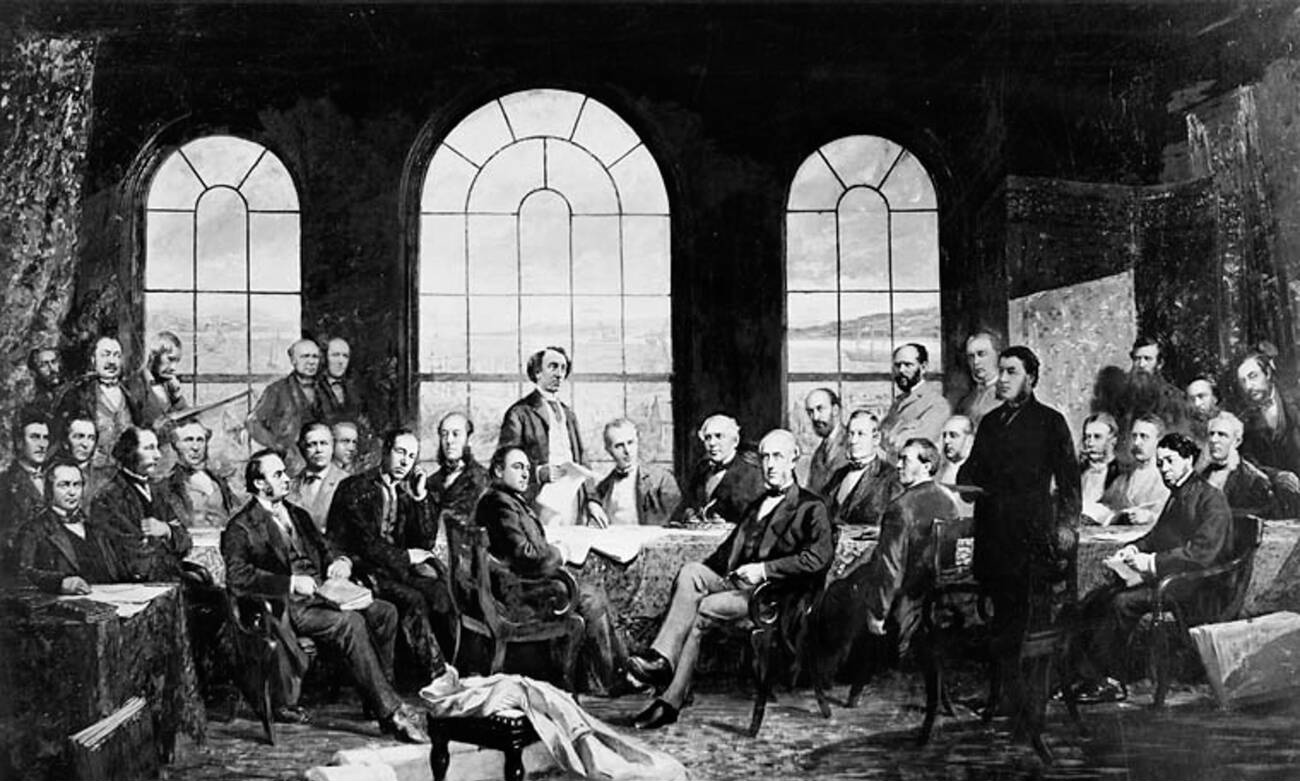
Against this backdrop the provinces of British North America contemplated a closer union. Concerned with their economic future, defence against potential American aggression, and internal political challenges, on July 1, 1867 they united into a single federation, called the Dominion of Canada.
A new country was born with John A. McDonald as its first Prime Minister.
Society
1960s
World War II ended in 1945 and the Cold War began. The democratic countries of Europe and the rest of the world competed with the USSR and China for political domination.


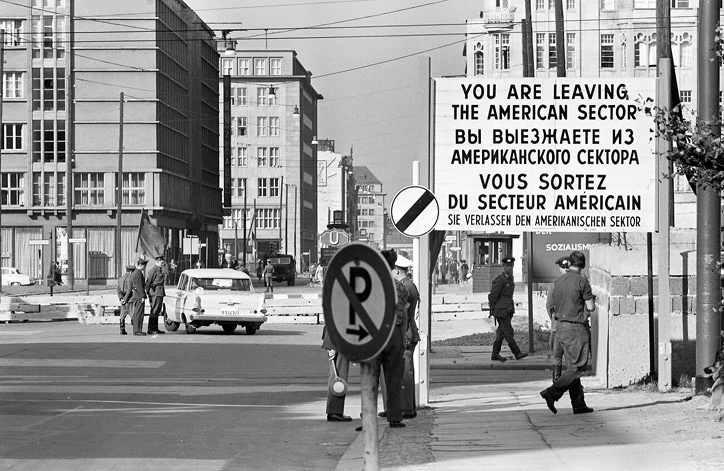
In the 1960s the symbolic and literal division in Europe became a reality with the building of the Berlin Wall, which divided the city into democratic and communist spheres.
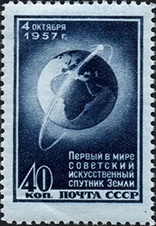
The Cold War created the Space Race: each philosophy assuming that their enemy would use outer space to start a war of world domination.


The stress generated by post-war events created a desire to invent an alternative future. A hopeful new youth movement began with fresh ideas.
Mod fashion exemplified this – the dresses were loose, shiny and best suited to an adolescent figure. The pink mini dress with its feather trim is young, sexy, and optimistic.
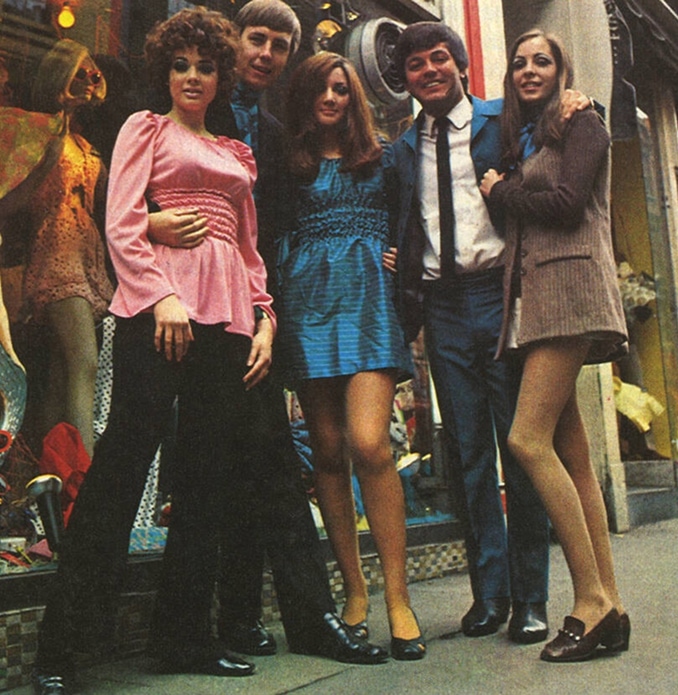
The decade was a period of significant change and evolution for Canada, marked by major social, political, and cultural shifts.
As the country moved closer to its centennial celebration in 1967 a new sense of national self-identity emerged.
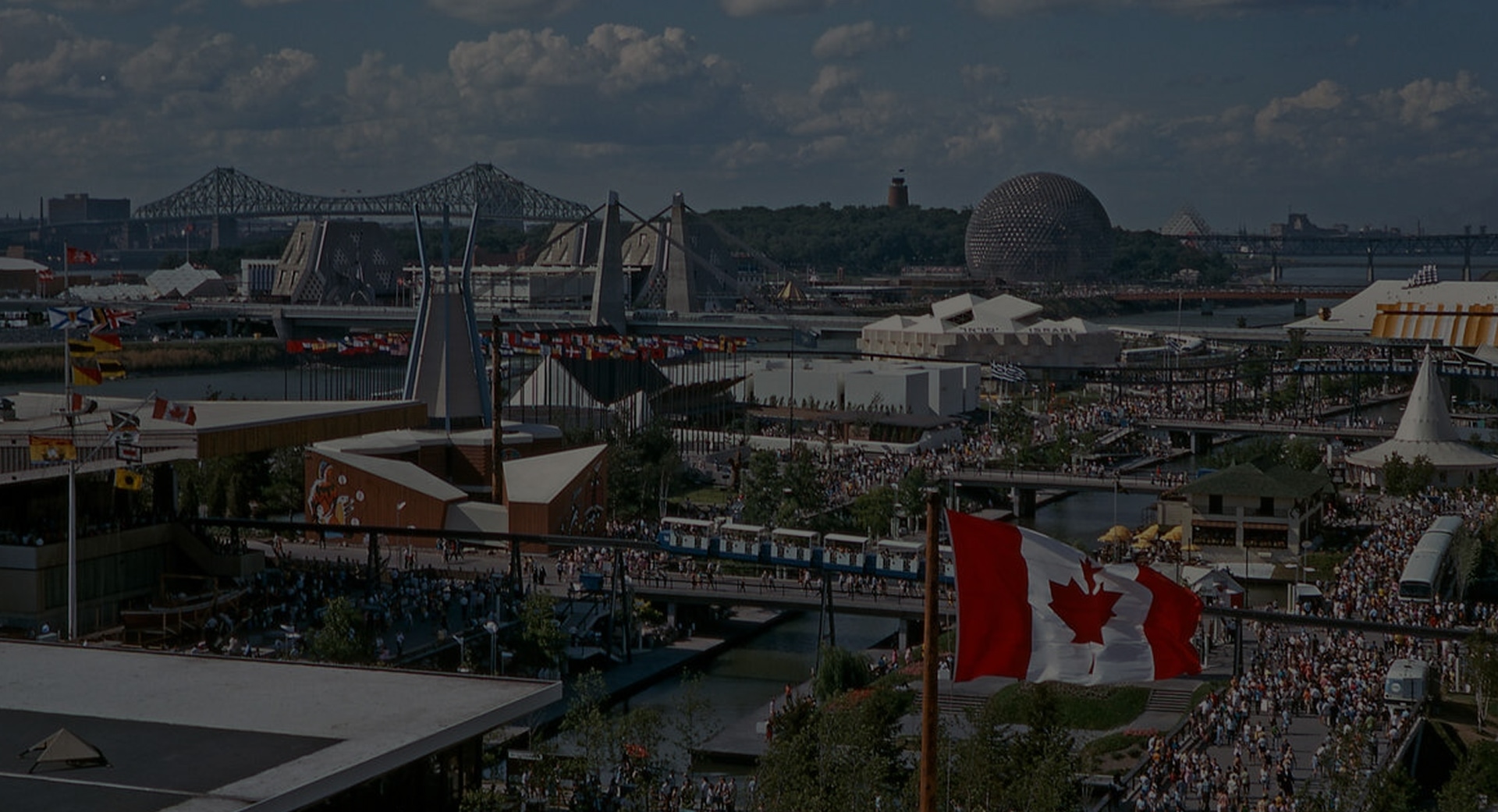
The Maple Leaf replaced the Red Ensign in 1965 moving the country away from traditional ties to Britain and towards a new multiculturalism.

A growing concern over American influence on the country’s foreign policy and cultural landscape kept the Canadian military focused on peacekeeping even as American draft dodgers sought refuge in Canada to avoid military conscription during the Vietnam War.
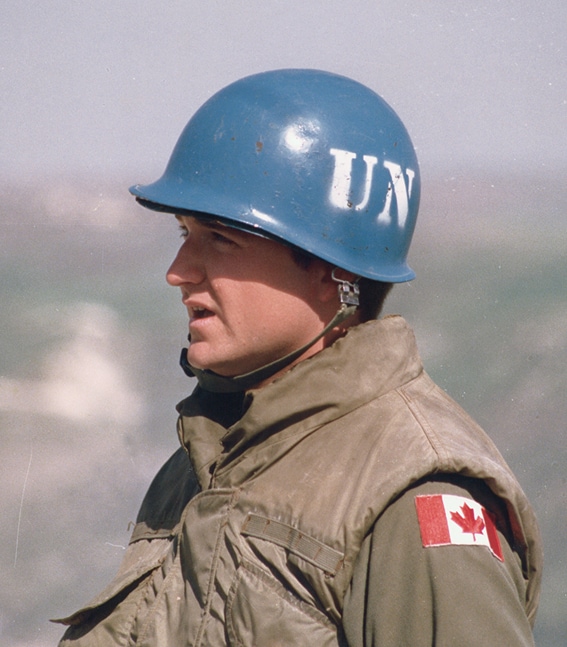
But there were also rifts within the country. During Quebec’s Quiet Revolution a growing sense of nationalism emerged, with many questioning the province’s place within Canada and advocating for Quebec’s political sovereignty.
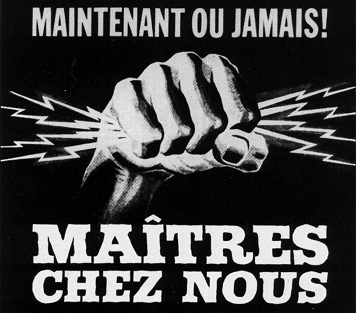
We’ve seen how fashion defines eras, and how the values, socio-political events, and technology of a time influences the fashion of that time.
Looking back to our two dresses we see why they are so different, but also why they share so much in common.
They are both provocative, but they have limits as to what is appropriate and respectable for their time periods.
The 1860s dress focuses on the smallness of the waist for the exaggeration of femininity. The rest of the body is heavily disguised, especially by the skirt. It covers the body so much so that the element of femininity is her small waistline. In contrast, the 1960s dress does not display the waist at all. The waistline is of no importance, but the legs are all-important – the complete reverse of the focus of the earlier dress.
Perhaps, more importantly, both of these dresses are celebratory garments.
They were designed to be worn at important social events, and they conveyed to a degree, the status and financial positions of the women who wore them. They also reflected the positions of the families and the men who traditionally headed the families.
Certainly, in the 1860s a woman was often merely a fixture in a man’s household.
By the 1960s she was becoming very much her own person.