
- Overview
- Complementary Fabrics
- Clever Construction
- Bodice Interior
- Getting Dressed in the 19th Century
- Flowers
- Skirt & Lace
- Hemline Detail
- Shape
- Undergarments
- Couture to Art
 Deconstructing Worth
The making of early haute couture
As fashion constantly evolves, understanding how individual garments are constructed can tell us a lot about their precise moment in history.
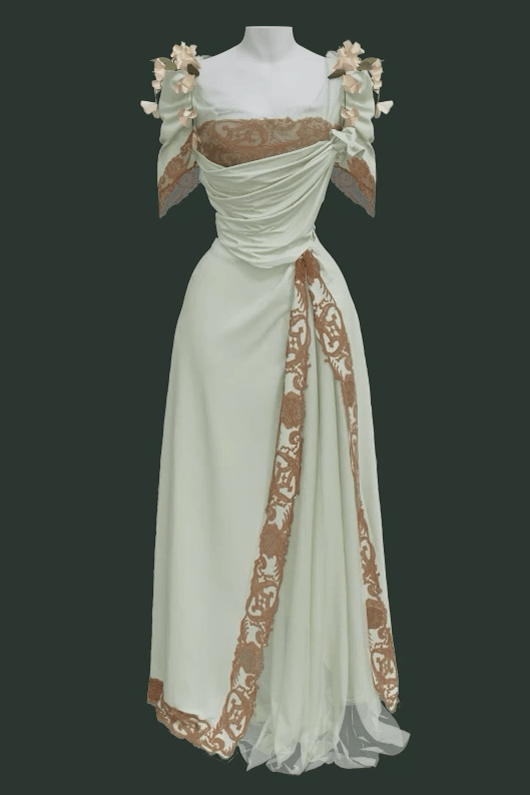
In this exhibit we examine an Art Nouveau-style evening gown created in Paris between 1898 and 1900 by the House of Worth, deconstructing it to find the story behind each part of it.
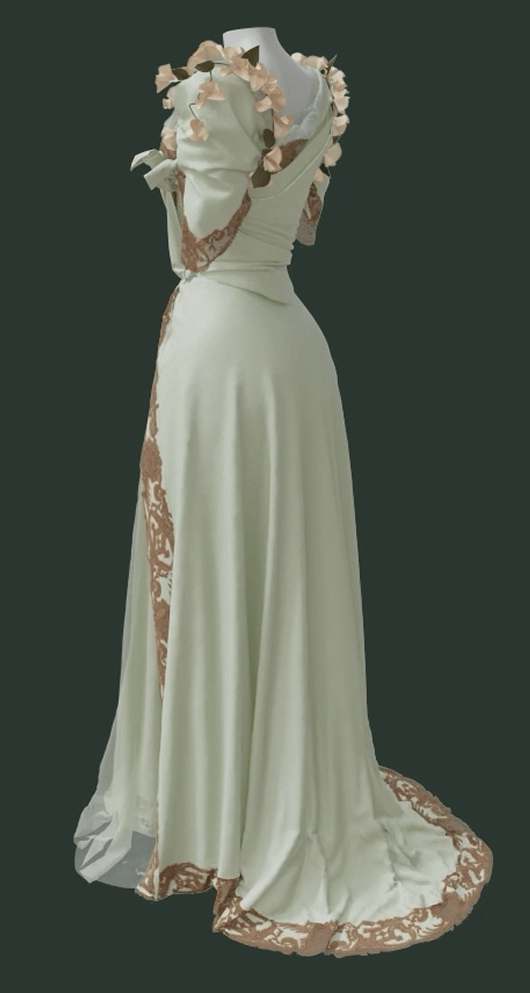
A well-preserved piece of our collection, the gown features a fluid, asymmetrical shape – a hallmark of the Art Nouveau movement, which was inspired by nature, Japanese art and culture, and other influences. The graceful design offers a sharp contrast to the structured Victorian styles that dominated much of the 19th century.
What you see before you is a 3D replica of the gown developed so that we can properly study its parts without damaging the original artifact.
In 1858, the English-born Charles Frederick Worth opened his Paris atelier, which employed a large dressmaking team, and was among the first to put brand labels on garments. The House of Worth was expensive, exclusive, used lavish fabrics, and paid close attention to fit. By the end of the century, the House dominated Parisian fashion and Worth was known as “the father of haute couture.”
Wealthy, upper-class women would travel to Paris to buy complete wardrobes from the House of Worth. Garments were shown on live models and clients could have each item custom-made to their exact measurements. Charles Frederick Worth died in 1895, but his sons, Gaston-Lucien and Jean-Philippe, successfully took over the business. One of the two would have designed this gown.
Complimentary Fabrics
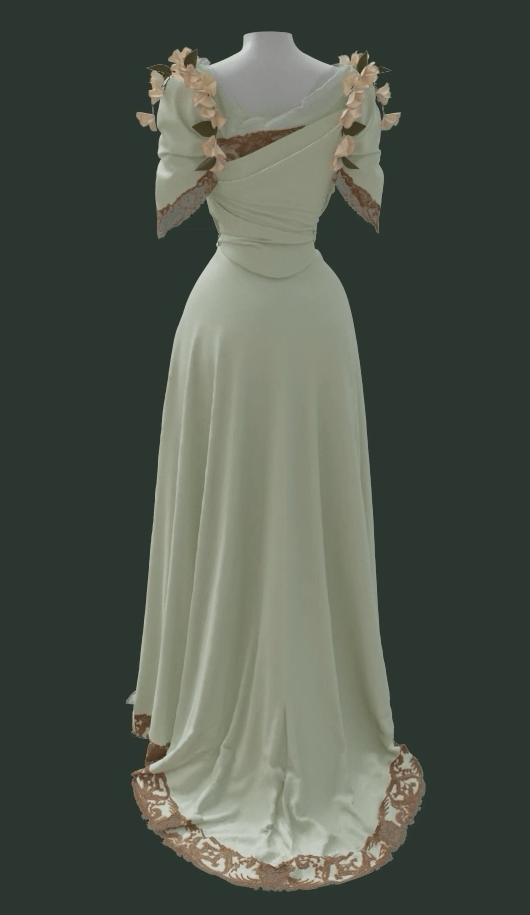
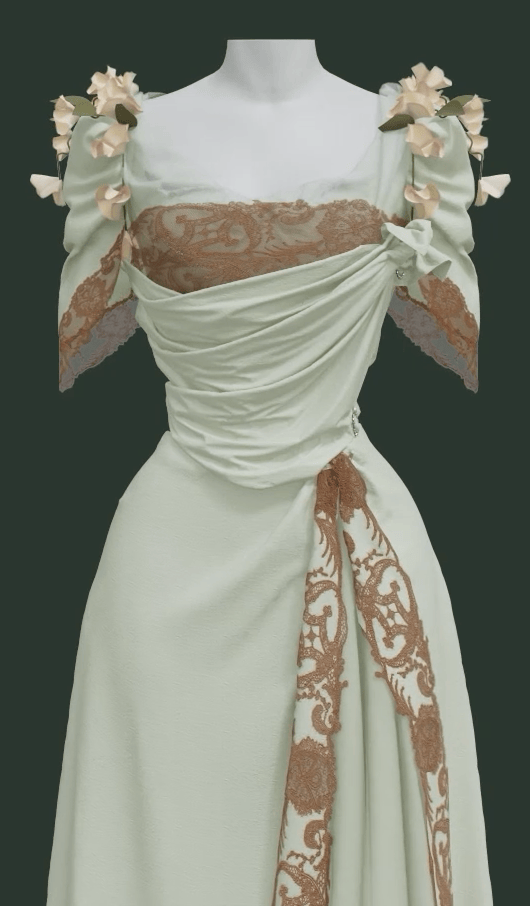
The dress has a separate skirt and bodice made from four types of silk in the same colour, with surface decorations of cotton lace and convolvulus (morning glory) flowers. Worth used a silk taffeta foundation, with overlays of silk crepe de chine, silk chiffon and silk netting.
The neckline features silk netting and three-inch wide lace with an irregular edge. The lace is also doubled on the bodice to create a wider effect. Draped, asymmetrical silk crepe de chine on the bodice and skirt flows over the garment’s highly structured base layer.
Clever Construction
The dress is both machine- and hand-sewn, reflecting an artistic tension between the natural world and methodical, human machinery.
The front, left side of the bodice has 3 to 4 pleats, which pull the fabric off-grain into a bias, even though the waist is cut on the straight grain. Clever cutting throughout the garment creates the appearance of bias, with selvedge used for finishing.
The foundation for the bodice laces at the centre back and the skirt attaches to the bodice at the waist with hooks and eyes. A small ornamental buckle set with clear rhinestones appears on the waist, while another is applied to the left, front side of the neckline.
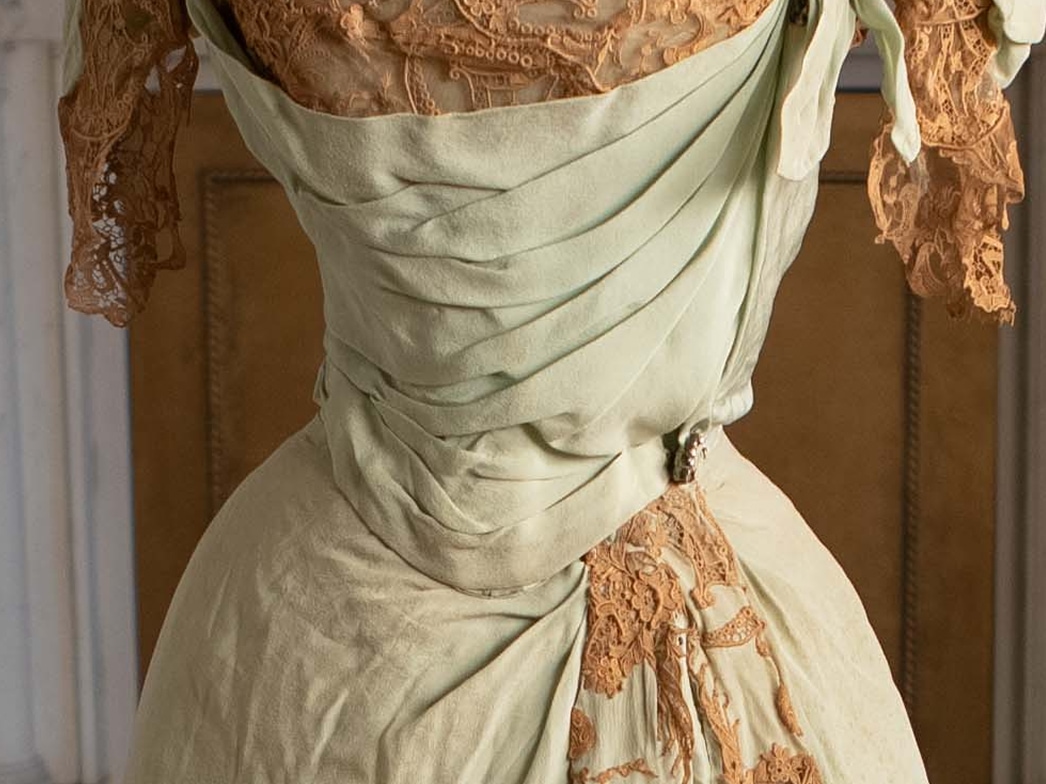
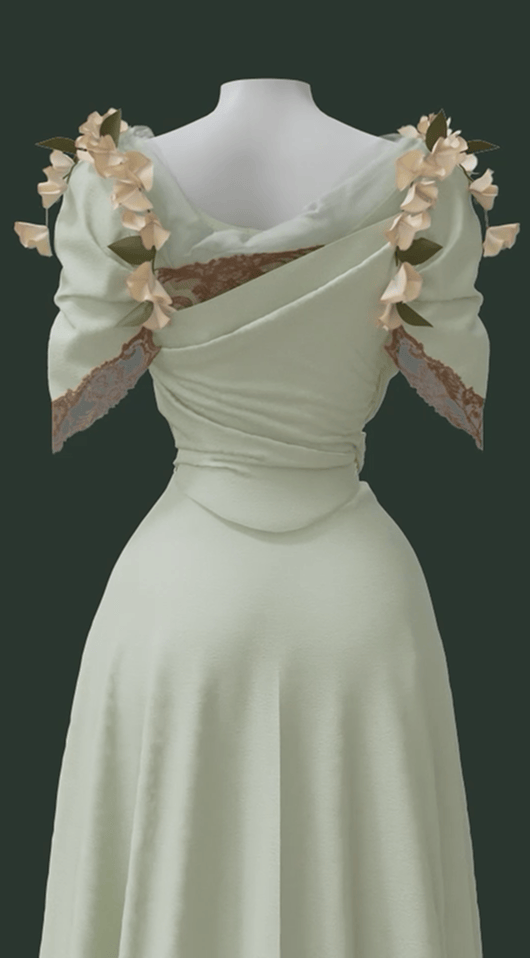
The lace appliqué underwent repair stitching before the dress was acquired. For historical garments, restoration can fill in missing pieces of the story. These special items need long-term care and attention to endure through decades, and even centuries.
The back of both the bodice and the skirt repeat the silk netting on the front. However, the chiffon and crepe de chine added on top create the appearance of asymmetry. The drapery is cut on the cross-grain using folded-over selvedge as the finished edge.
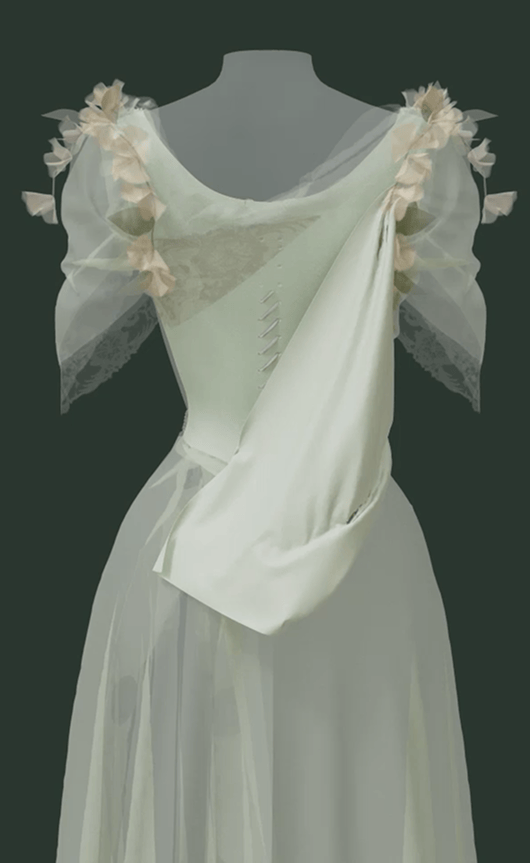
The foundation bodice layer is made from silk taffeta. Like the front, the doubled lace creates a wider effect.
The upper-class woman who wore this dress would have had help putting on her undergarments, and the dress itself. Her maid would have used a bodkin – a long, narrow tool that can grasp and pull cord, ribbon, elastic, or trim through eyelets – to lace the bodice together in a spiral pattern.
Throughout the garment, dressmakers used a fine thread, likely made of silk, in two thicknesses. The thinner thread was used for appliqués, lace, and draperies, while all visible, major seams were machine-sewn using the thicker thread.
The bodice and skirt feature various stitch lengths. A running stitch is used most often on the dress, including on the boning channels. These stitches grow to nearly basting length on the interior near the sleeves and shoulders.
Bodice Interior
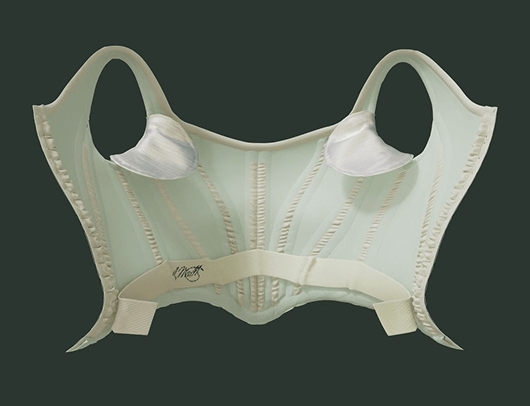
Although the decoration on the dress is asymmetrical, the foundation of the bodice is symmetrical and is constructed of multiple panels, covered by silk crepe de chine. The structure of the bodice is standard for the time period. The bodice hem is finished with 1-inch bias tape, while the neckline is finished with petersham – a thick, stiff, yet flexible corded ribbon usually made from cotton, silk or even linen.
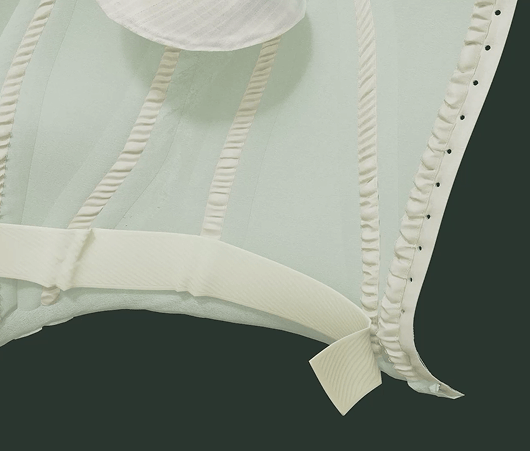
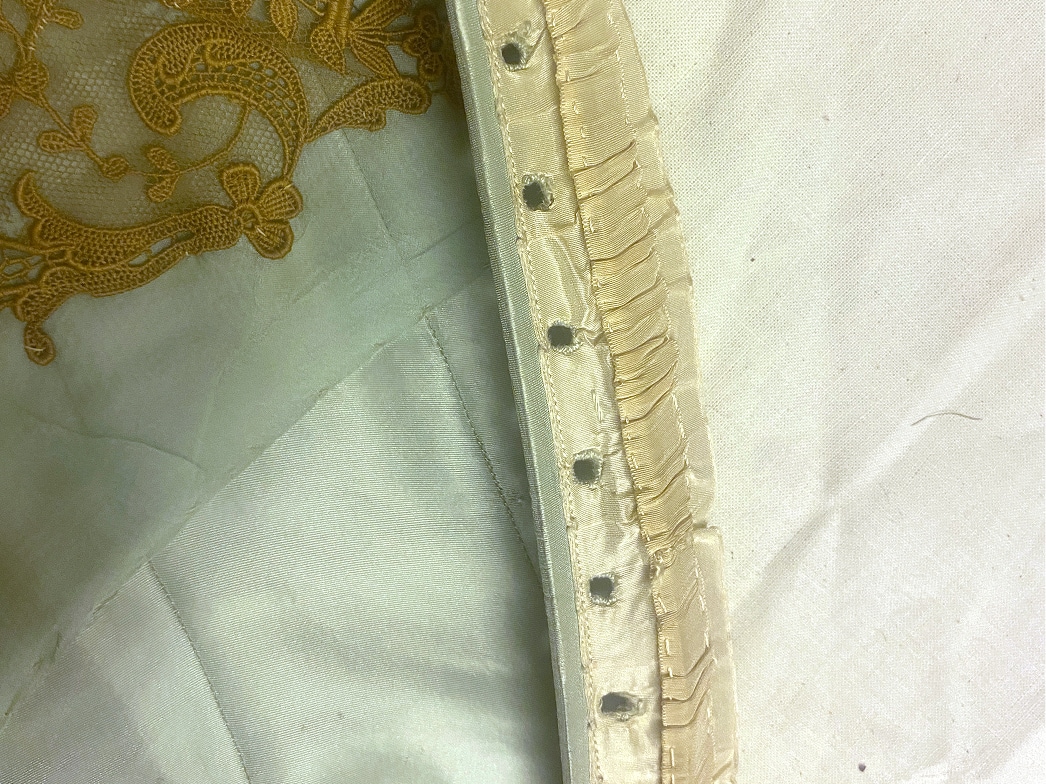
The eyelets on the bodice are handmade, not metal or machine-made. Each would have been individually sewn, using a buttonhole stitch. While the eyelets are a small detail, they bring a handmade, couture quality to the dress. They were also a standard practice for couture houses such as Worth.
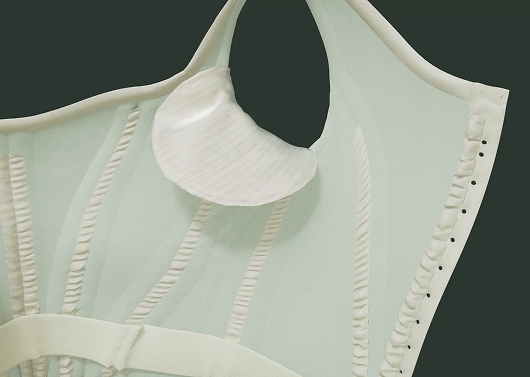
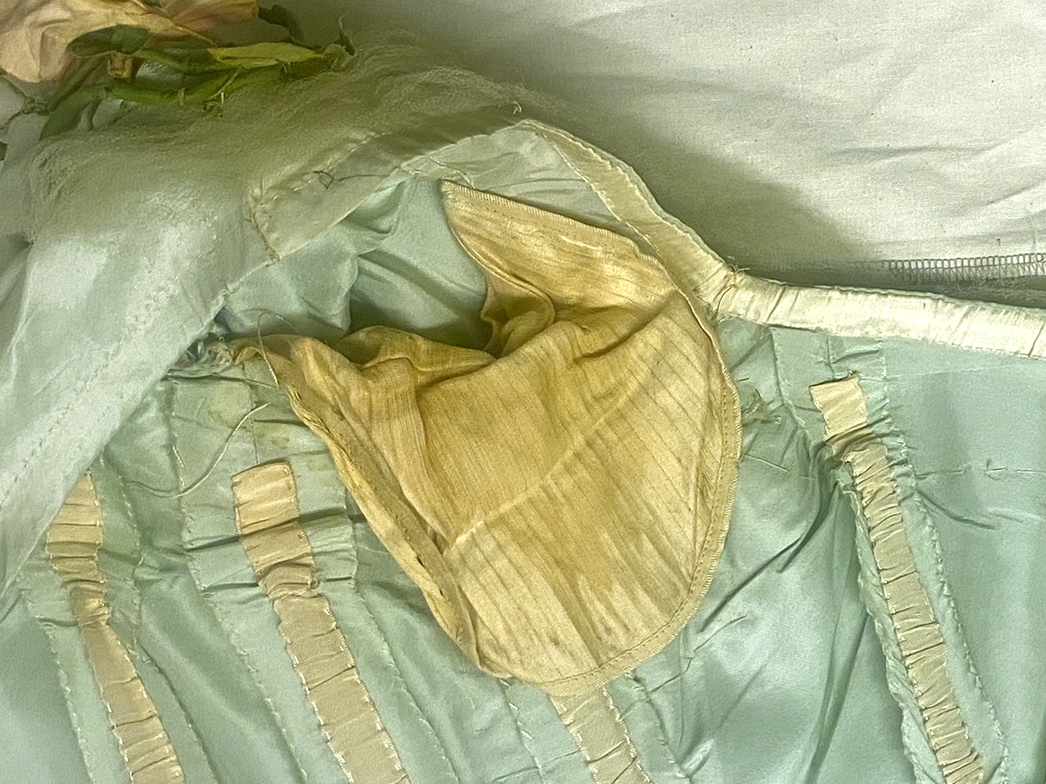
Interior underarm pads, or shields, were used to protect clothing from perspiration. Layers of cotton or linen were sewn together into a pad that could be removed for washing, minimizing the need for professional stain care.
Underarm shields not only helped the wearer to maintain the dress; they’ve also preserved this historical piece from staining and rot. As we’ve embraced fast fashion, most people don’t mend or care for their clothing over the long term. Gentle care protects artworks, like this dress, so we can study and admire them today.
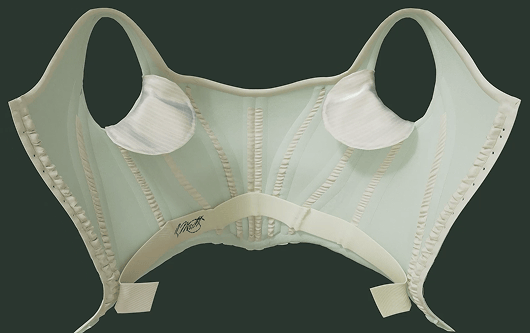
Boning inside the bodice is likely made from baleen, or whalebone, which is a lightweight, flexible and used primarily in higher-end garments. As the wearer moved, her body would warm the natural boning and make it pliable so it would adjust to her shape.
Demand for whalebone during this period led to the near-extinction of baleen whales and quickly drove up the price. While steel boning became a cheaper option for corsetry, fashion houses like Worth would still have chosen baleen to convey luxury and exclusivity.
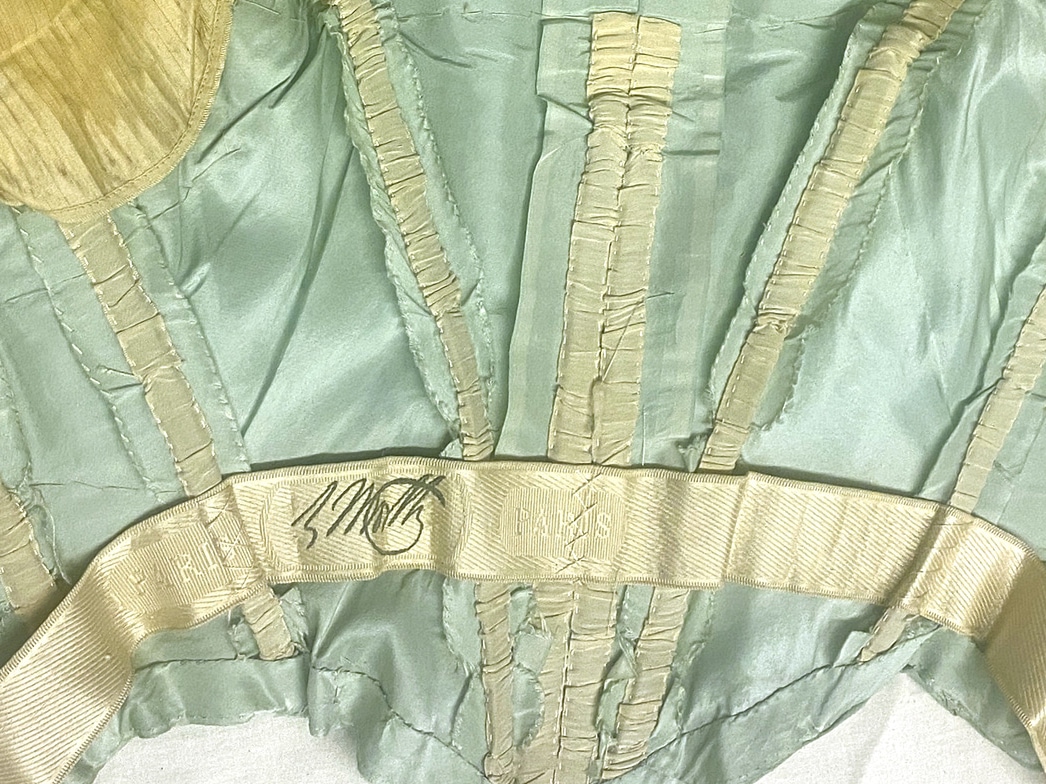
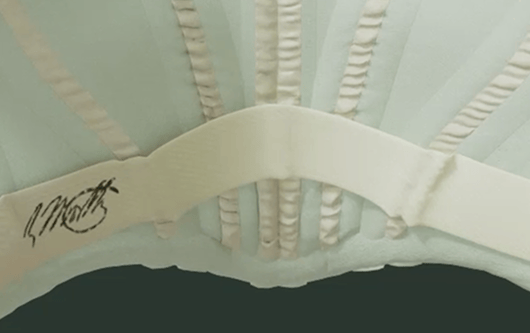
On the waistband, we can see the original Worth label is still intact bearing the style number of the dress: 48088.
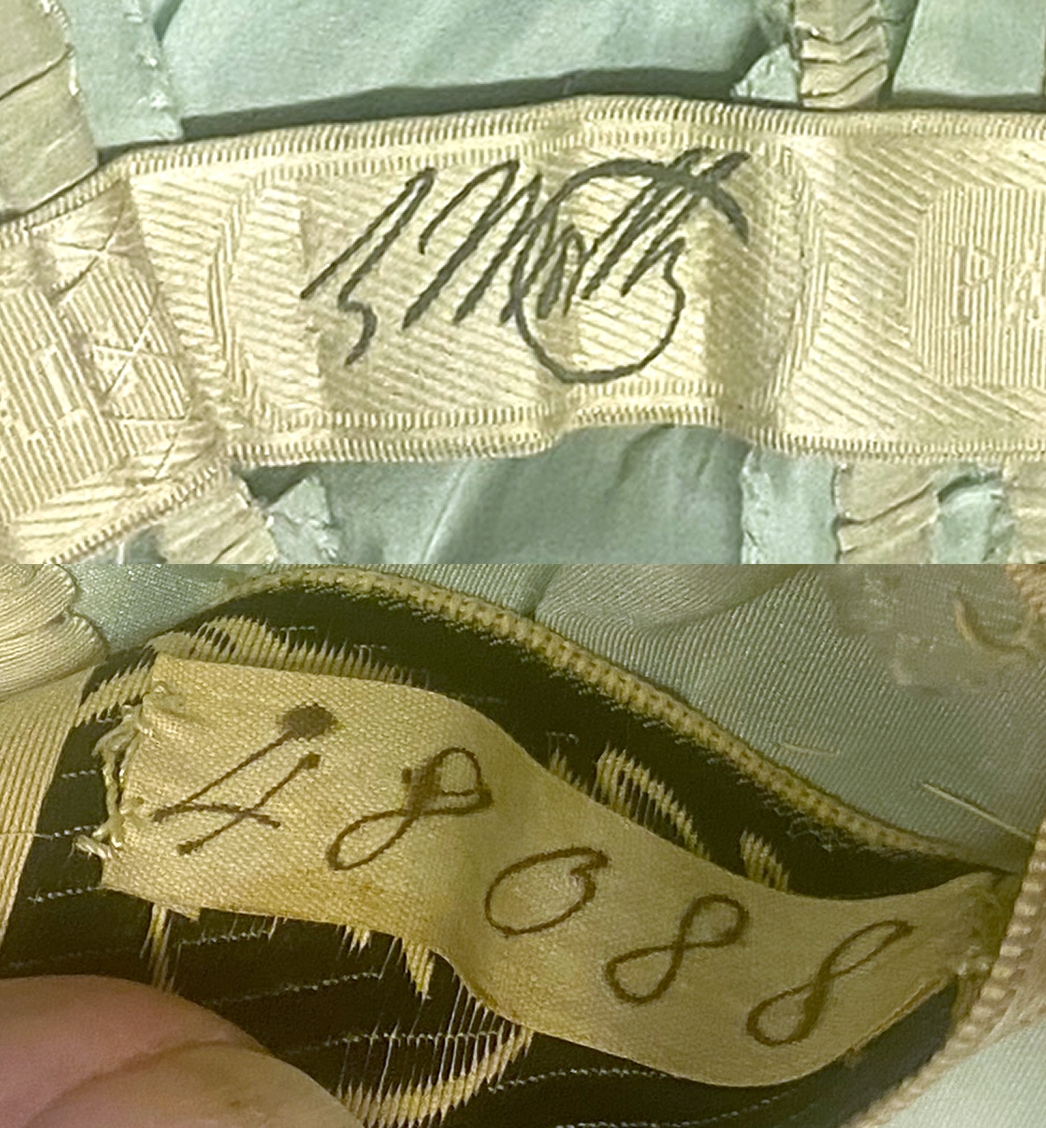
Worth was one of the first designers to include brand labels in high-fashion garments. Once the practice spread, designers of the era commonly stitched labels into the waistband – a structurally necessary part of the bodice. Unlike today’s easily-removed labels, Worth’s placement ensured the dress would always bear the fashion house’s name.
The waistband eased any strain on the seams and fabrics of the tight bodice, so it was always fastened first to stabilize the dress.
Getting Dressed in the 19th Century
Corsets were designed so an independent woman could get dressed on her own. However, an upper-class woman may have had up to three people to help lace her corset and complete her dressing. They ensured the dress and all its voluminous fabric sat properly on the woman’s body.
In the 19th century, upper-class women often changed their clothing 2 to 3 times a day, which kept their staff busy with multiple dressing and re-dressing processes. Unlike today, switching to a new outfit was a time-consuming, labour-intensive experience.
In the 1890s, fashion was an expression of social status. A woman’s marriage revealed her place in society, and her clothing reflected her husband’s level of status and financial success. A large wardrobe, with different outfits for every occasion, whim, or time of day, showed her elevated place in society.
Worth dresses were known for their high-quality fabrication, complex construction, and fine materials. Wearing a garment from the House of Worth was another indication of high social status.
Flowers
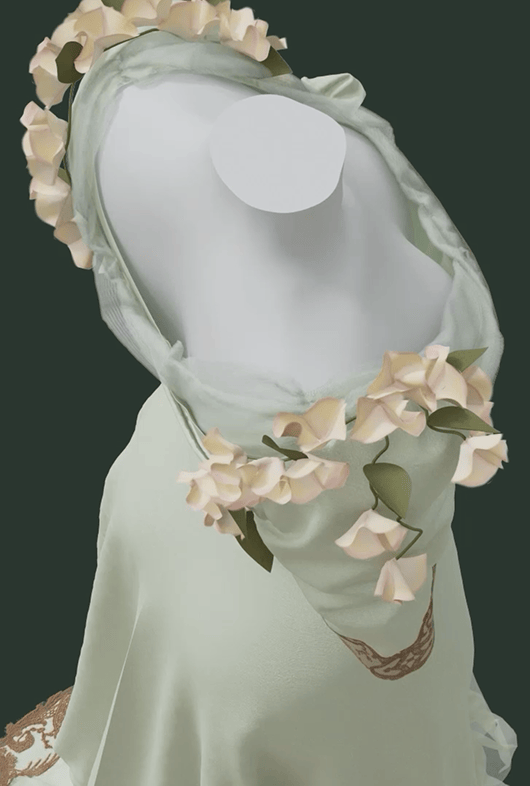
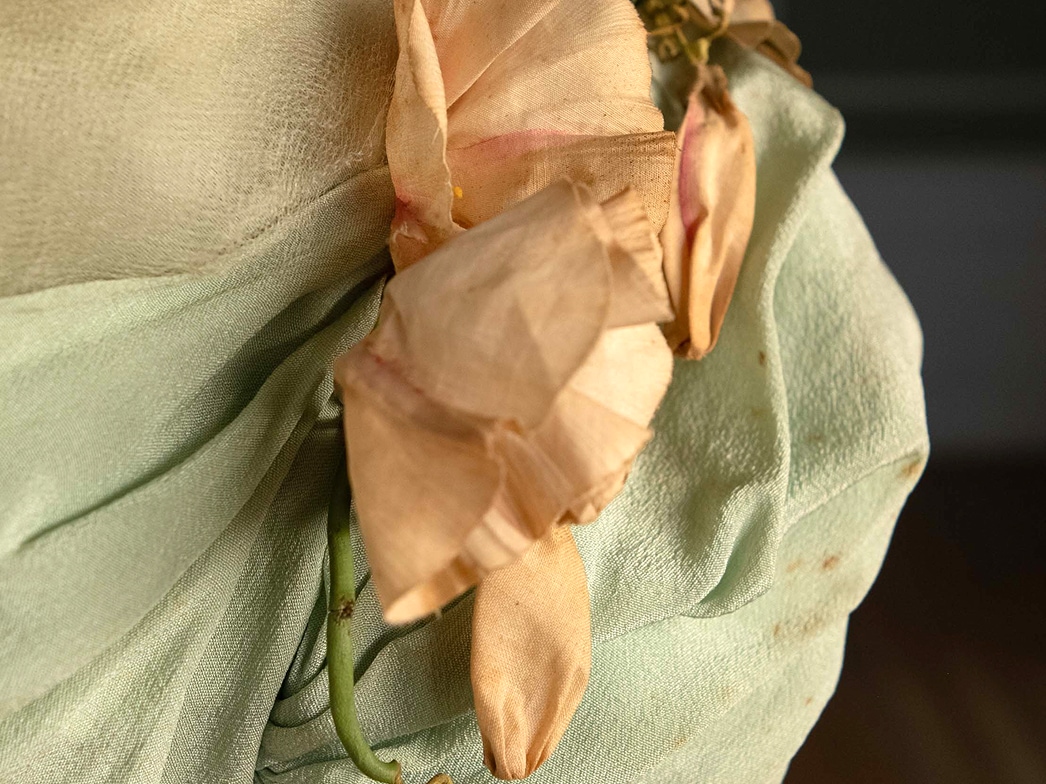
The gown also features about 20 white, cotton flowers handmade with fabric and metal wire, and handpainted with touches of pink and blue. The Worth atelier would have purchased these decorative pieces from a flower maker that supplied milliners, or hatmakers. The flowers also symbolize the Art Nouveau celebration of natural forms.
When the curator acquired the dress, he noticed several void spaces where additional flowers would have been applied. The original garment may have had up to 30 of these decorative pieces.
Skirt & Lace
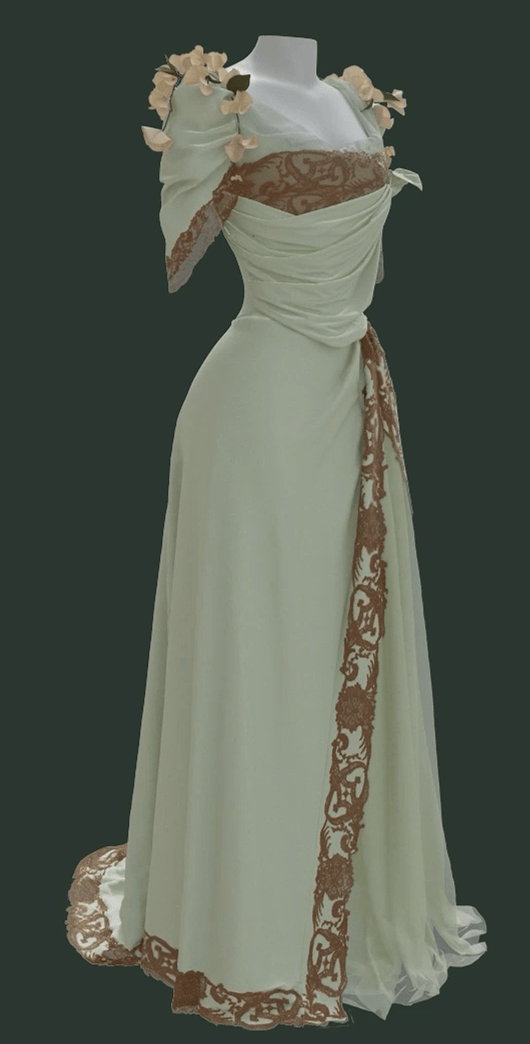
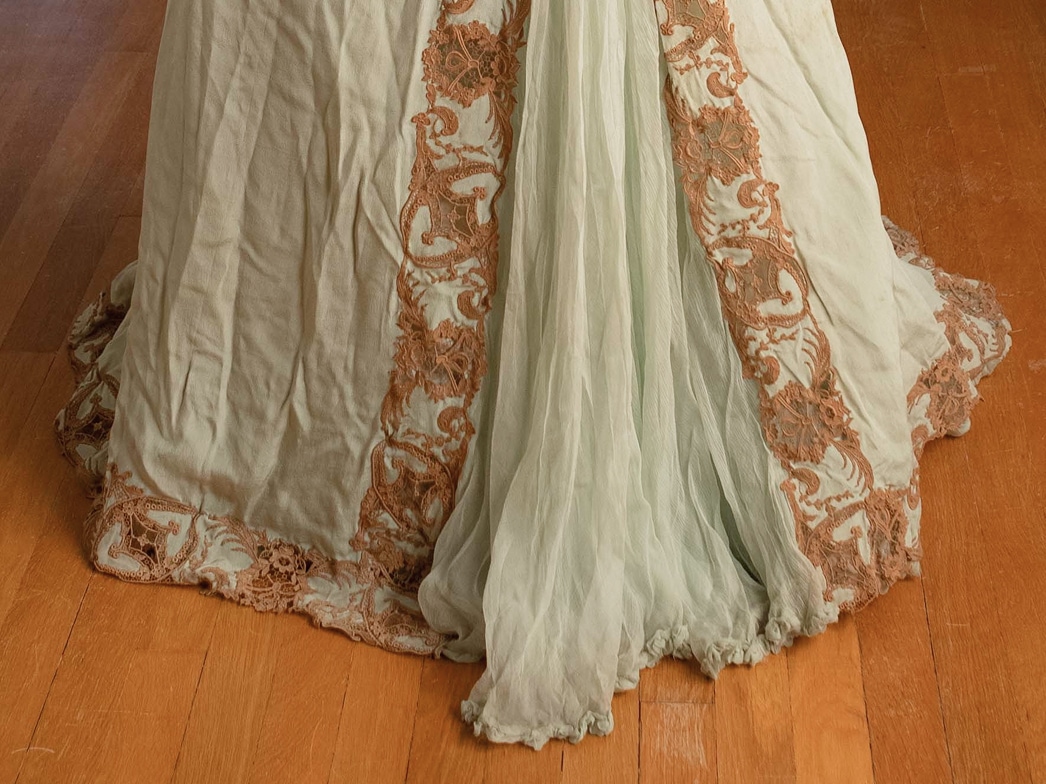
Where the skirt closes, the designer added a silk chiffon triangular gore positioned between the taffeta and crepe de chine layers. It’s attached to both the front and back panels of the skirt, with an opening cut into the fabric and finished by hand. The upper section of the gore is pleated in radial pleats and attached below the waistline.
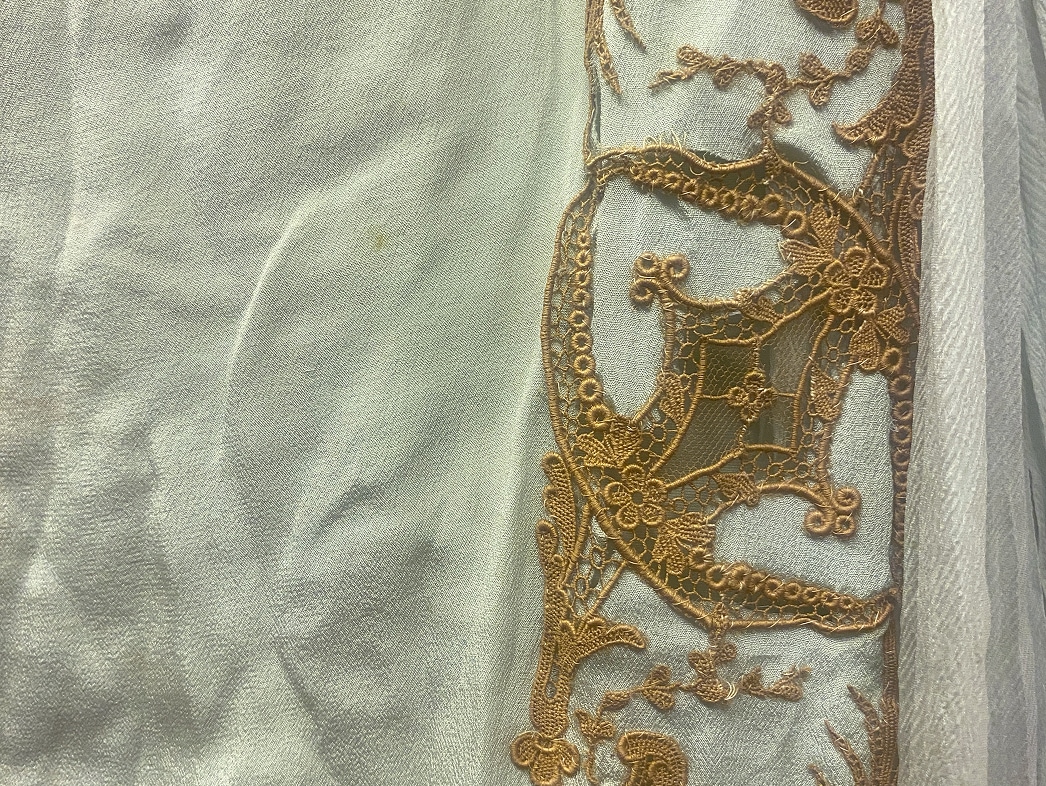
The skirt is adorned with grafted lace motifs sewn onto the fabric. The dress features a combination of grafting – the process of seamlessly joining two pieces of fabric together – and appliqué. The appliqué stitch was produced with a different thread than the rest of the garment, which indicates that it may have been repaired. All the lace appliqués and lace draperies were sewn by hand using a fine thread, likely made of silk.
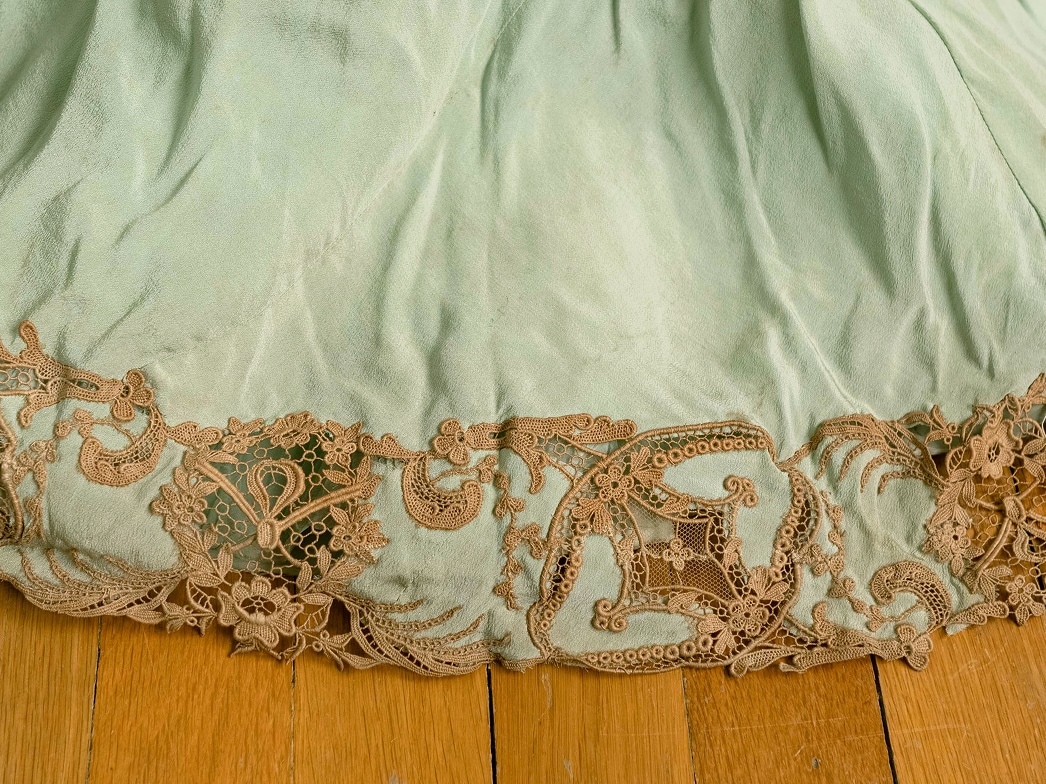
The curator believes the lace was dyed brown to achieve an antique quality, with an intricate pattern that is machine-made. This same pattern repeats in a sequence used in various ways throughout the dress to produce different visual effects.
Many women owned fine pieces of lace that were passed down through generations as heirlooms or pieces of a trousseau, traditionally made for brides by their female family members. The lace could be applied to different garments or used to elevate a plain dress. Hand-crafting lace was a practice that began to fade as machine-made lace took hold.
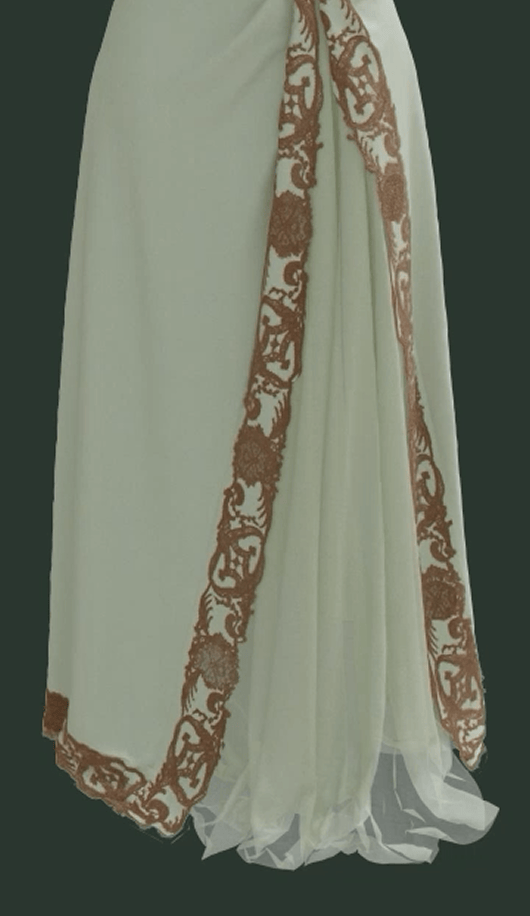
Hemline Detail
Lace is applied to both the front and back of the hemline. Underneath, a dust ruffle of taffeta is finished by pinking – the process of finishing a raw fabric edge with a scalloped or zigzag cut to prevent fraying. The dressmakers used a pinking machine to cut the fabric.
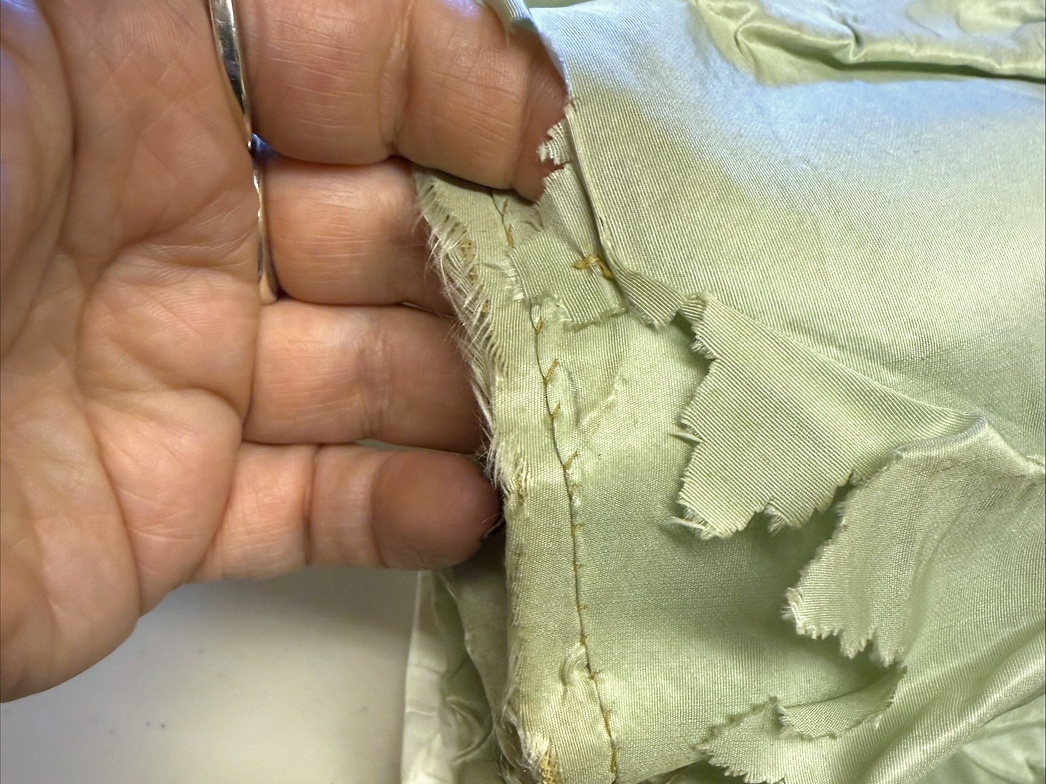
The hem of the chiffon gore features a ⅝ or ¾-inch frill made by sewing the same silk chiffon fabric into a narrow tube. This tube is then ruched or shirred to form a frill which is attached along the bottom raw edge of the gore. This technique offers an elegant way to create a frill without needing to finish the fabric edges. The ruffle adds weight to the hem, and makes the chiffon flare on the floor. Coincidentally, the flare is similar to the shape of morning glory flowers.
Shape
The construction and underlayers of the dress come together to create an idealized female shape – emphasizing harmony and balance on a woman’s body. The bell-shaped skirt has padding at the back of the hips, which makes the stomach appear flatter. From the side, the gown and corset transformed the wearer’s silhouette into a sought-after “S-shaped” curve.
In the earlier 1890s the skirt would have had a rigid, conical form. It would have been viewed from the front to present an “X-shaped” silhouette. After 1898, the rigidity of the earlier 1890s softened with the woman viewed from the side, and angles were replaced by curves. She became an Art Nouveau form.
Undergarments
Before donning the gown, the wearer would have dressed in multiple layers of underclothing, starting with a chemise or shift, worn as a base layer next to the skin to protect the corset and outer garments from body oils, perspiration and stains.A pair of silk stockings with embroidery or needle work at the ankles, known as clocking, would have been worn. Elasticated ribbon leg garters with buckle adjusters and bows held up the stockings.
Corset
A corset was laced onto the body, providing bust support and the desired hourglass silhouette. The corset was cut with a sharply curved waist with a short hip line and contoured bust. Corsets of this time are in a transitional state, moving from the Victorian into the Edwardian straight fronted design. The front hook and knob clasp opening - known as a busk, would start to become more rigid and compress the abdomen. Corsets of this era are often cut with curved seams and triangular panels known as gussets to create more shape to the body.
Bloomers
Next came bloomers, also called pantaloons, or drawers - two pant legs on a waistband with an open seam in the middle for convenience when using the ladies’ room. The chemise is tucked into the bloomers for modesty.
Corset Cover
To protect the corset from damage by the dress bodice, a corset cover is worn. The corset cover also protects the dress from perspiration. A crescent moon shaped quilted bustle pad would be tied just below the waist to emphasize the hips and enhance the hourglass effect.
Petticoats
Then, up to three petticoats would add volume to the skirt, with the shortest petticoat first, followed by longer and fancier petticoats on the top.
Taffeta, silk moire, or damask petticoat
Finally, a coloured taffeta, silk moire, or damask petticoat could be worn to provide a slippery layer that allowed the skirt to move freely without wrinkling. These taffeta or silk petticoats gently rustled as the woman moved, and offered a surprise glimpse of coloured or floral-patterned fabric if the skirt hem rose up. Elegant satin or kid leather shoes with hourglass heels would have finished the look.
Couture to Art
The Worth brand’s reputation spread far beyond France, and still maintains its mystique among fashion lovers, historians, and collectors. We’re privileged to go inside this beautifully preserved garment to deconstruct the details.
Infused with Art Nouveau spirit, the gown reveals both exceptional craftsmanship and design elements that reflected the era’s definition of physical perfection – an externally dictated standard that continues to shift for women with each passing decade.